💸
Cut fuel spend
Cashew shells cost a fraction of diesel or LPG per kilocalorie, and the cost is denominated locally rather than in foreign currency. The real gap depends on local fuel prices and is calculated per site.
Comprehensive hot-air drying solutions for mangoes, seafood and more.
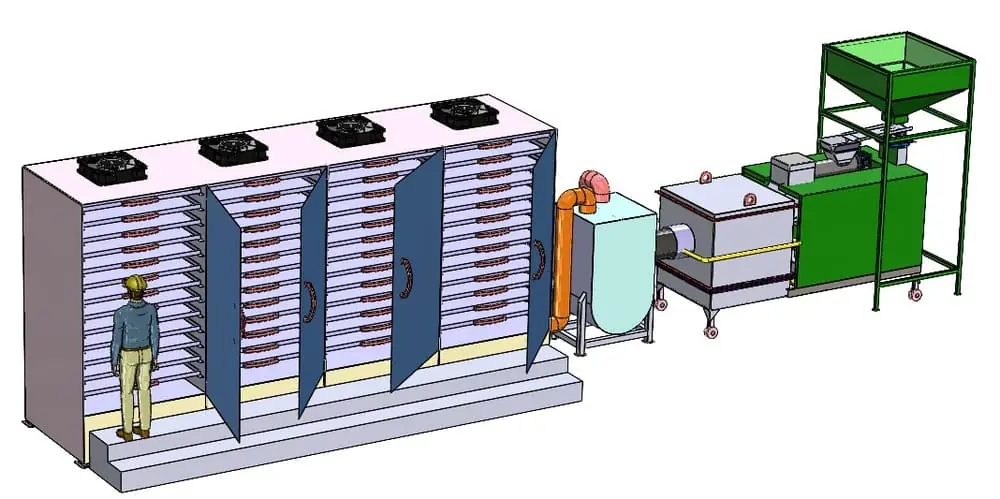
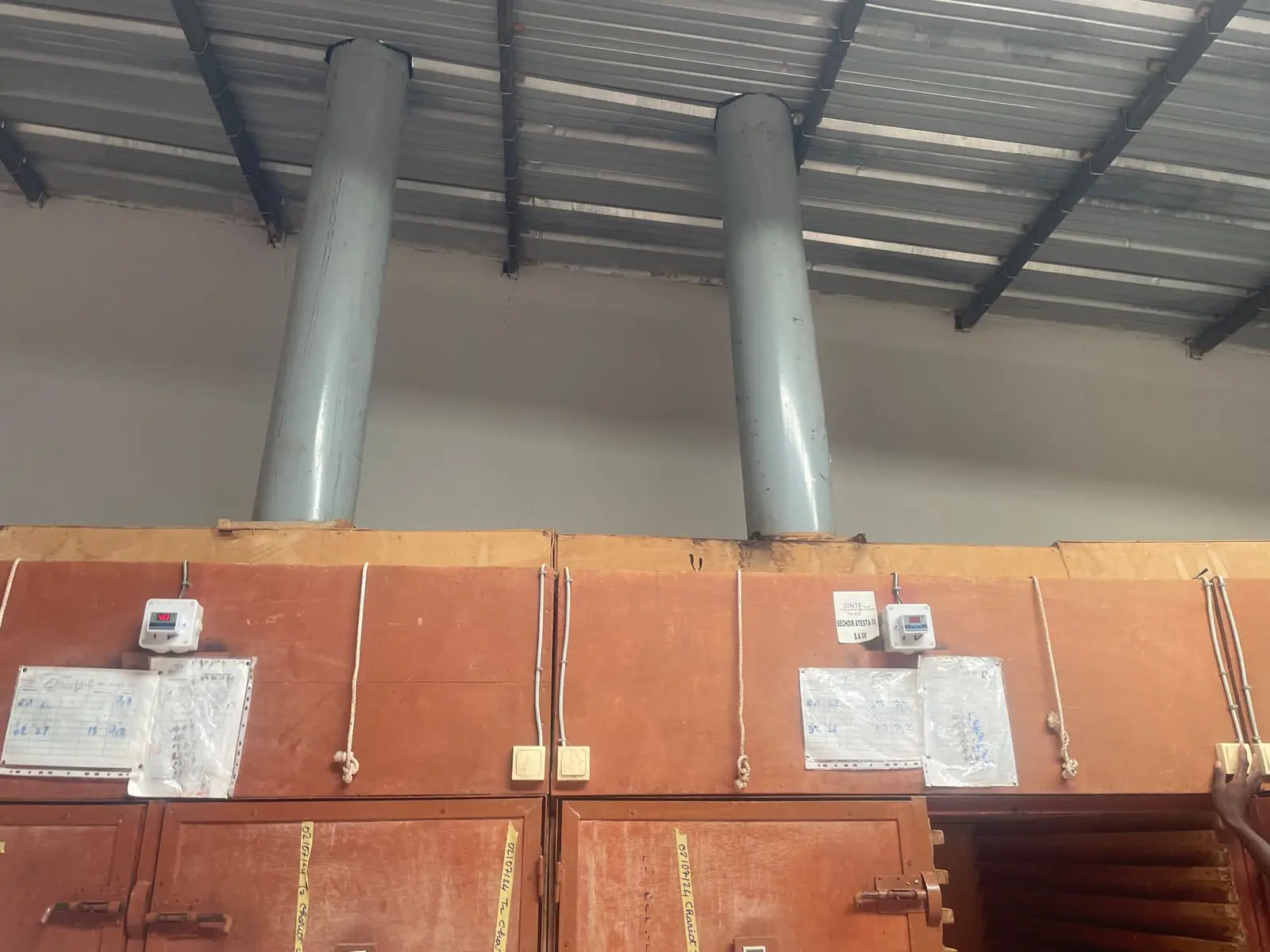
A complete biomass drying plant has three stages: a burner rated 200,000–900,000 kcal/h, a hot air generator delivering 2,500–3,000 m³/h at 50–150 °C, and precision-controlled drying chambers. Heat transfer is indirect, so combustion products never contact the product. Fuel is whatever residue you already have.
 Design setpoint · 118 °CIllustrative
Diesel, gas and open-fire drying are expensive, dirty and inconsistent. Our cashew-shell burners give processors clean, controllable heat — and turn a local waste product into value.
Cashew shells cost a fraction of diesel or LPG per kilocalorie, and the cost is denominated locally rather than in foreign currency. The real gap depends on local fuel prices and is calculated per site.
Closed-loop PLC control holds drying temperature to setpoint, so every tray comes out uniform — no scorching, no under-dried spoilage.
Biomass carbon belongs to the short cycle rather than to fossil carbon, and MERV-8 filtration keeps smoke off the product. Emissions reduction is stated as a design basis, not as a measured result.
Cashew processing byproduct becomes your energy source — a circular supply chain that keeps money in the local economy.
Stainless heat exchangers and refractory-lined combustion chambers designed for continuous, multi-shift seasonal duty.
Spare parts are dispatched alongside the machines, operator and maintenance training is included with installation, and remote PLC diagnostics work anywhere there is internet.
From a single batch chamber to an integrated tunnel line, every system is built around the same reliable cashew-shell combustion core.
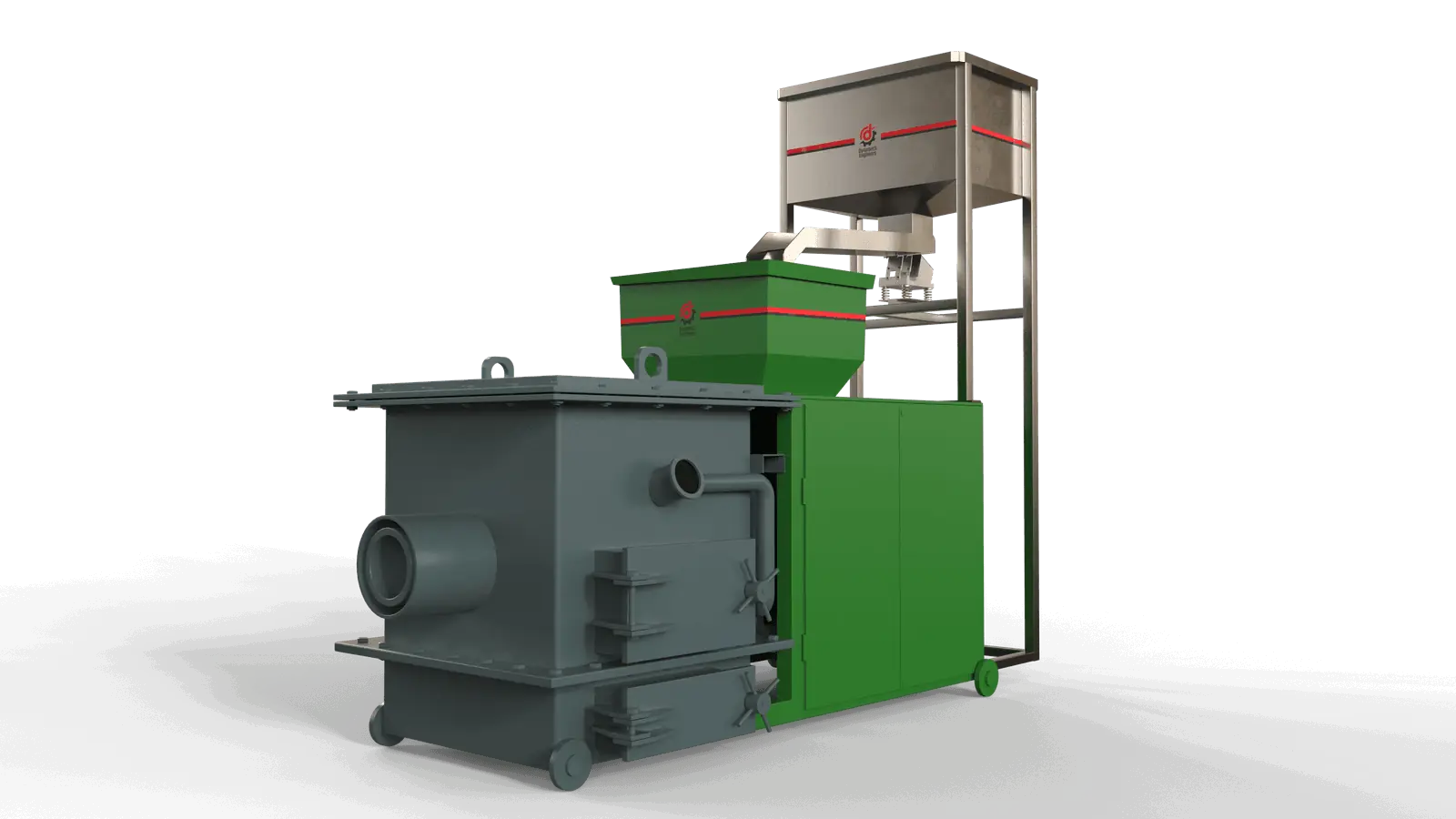
IllustrativePurpose-built to burn cashew shell cleanly and efficiently — the burner behind our one commissioned installation, a 900,000 kcal/h unit firing a steam boiler at PCCL in The Gambia.
 Illustrative
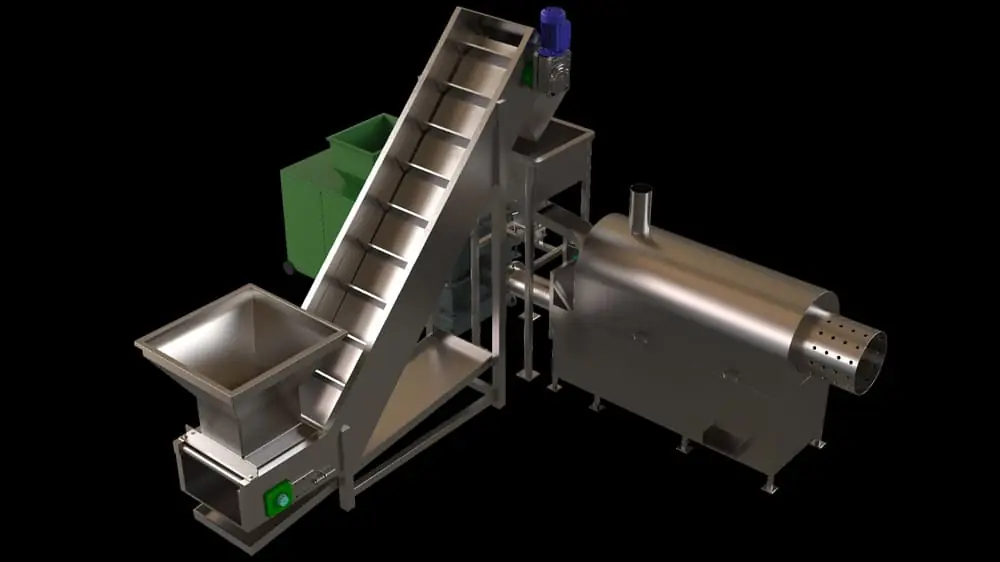
Runs on briquetted mango peel, rice stalk, corn cob, groundnut and cotton residue — ideal where cashew shell is seasonal.
 Illustrative
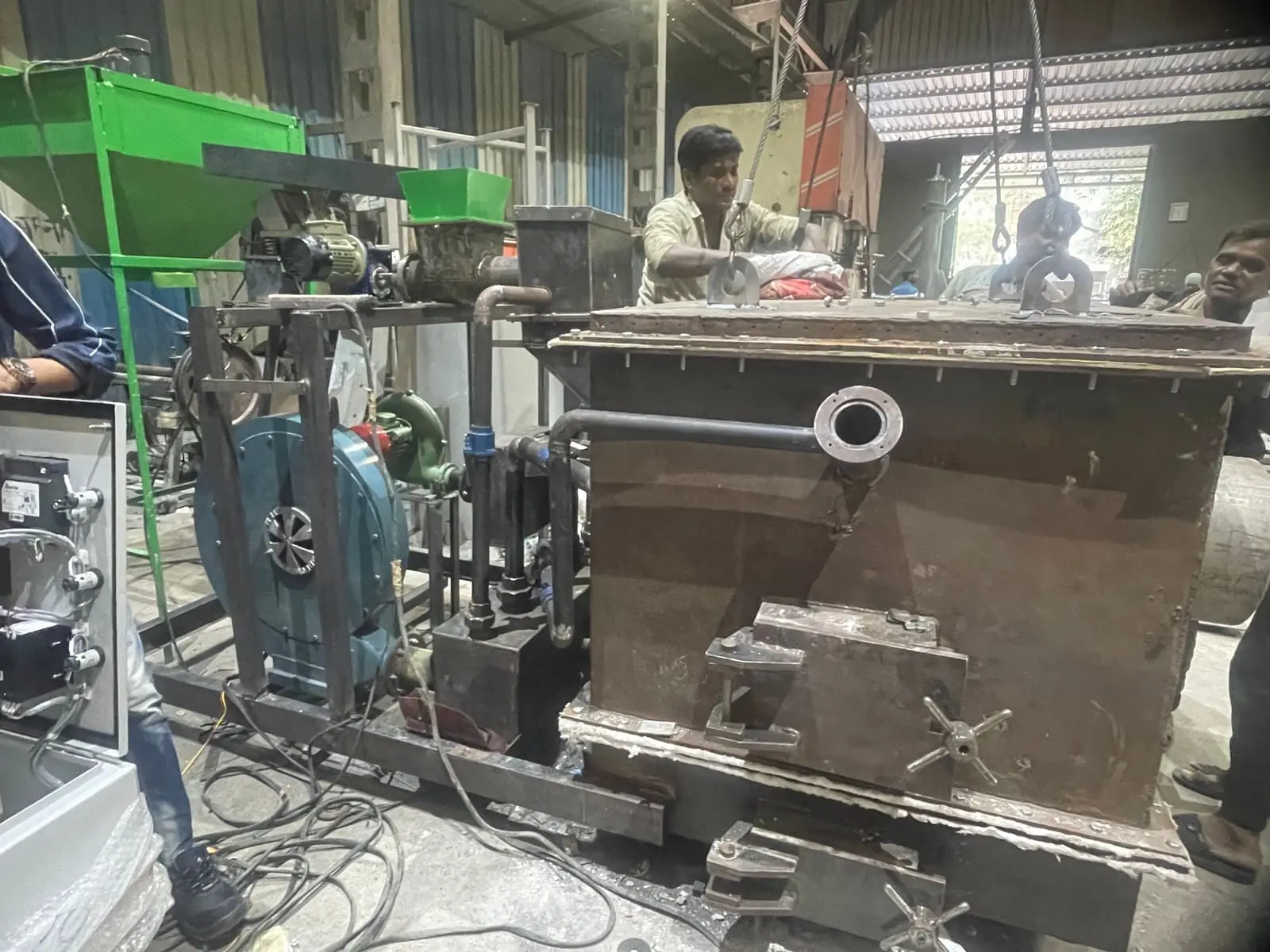
Indirect heat exchangers deliver clean, contamination-free hot air straight into your dryer for food-grade contact.
 Illustrative
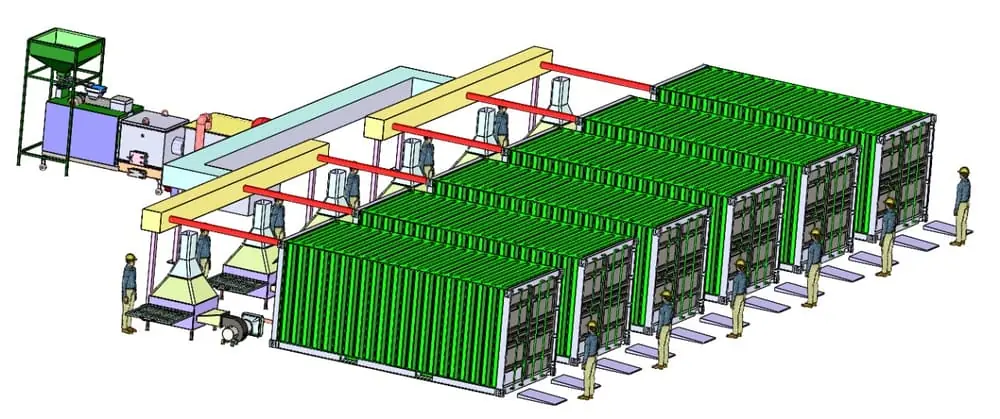
Continuous-flow tunnels for high-volume mango and vegetable operations that never stop during harvest peak.
 Illustrative
Cabinet and room dryers sized for cooperatives and growing SMEs — start small, scale as demand grows.
Have an unusual product or an existing dryer to retrofit? We engineer the burner, ducting and controls around your process.
Explore integrated systems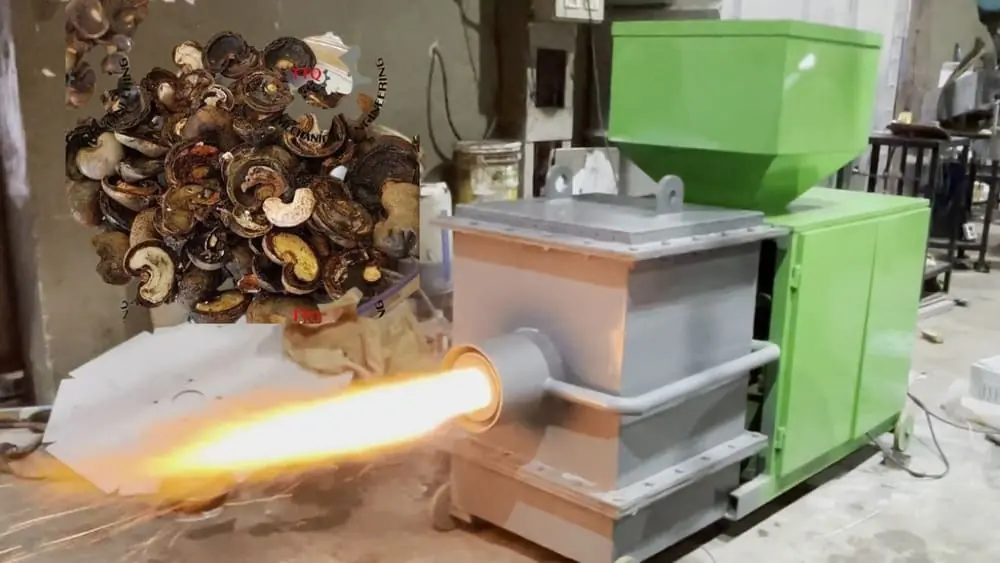 4,800kcal / kgIllustrative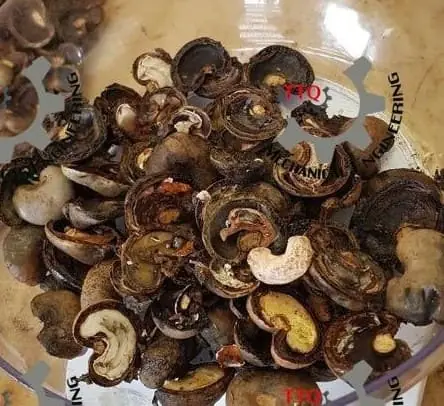
West Africa processes millions of tonnes of cashews every year — and the shells are usually a disposal headache. We turn that byproduct into a dense, high-calorie fuel that burns hotter and cleaner than firewood.
Industry context: African Cashew Alliance ↗
See fuel-cost comparisonCashew shells are rich in CNSL, a corrosive oil that makes them smoke, foul and corrode an ordinary furnace when burned raw. Pyrolysis solves that. Instead of setting the shell alight directly, we first heat it in a low-oxygen chamber so it breaks down into a clean combustible gas — then burn that gas in a second stage: hot, complete and smoke-free. The heat is passed to your product indirectly, so combustion never touches the food.
The shell is turned to gas first, then burned hot and complete — none of the black smoulder you get burning oily shell raw.
Two-stage combustion releases far more of the shell’s energy, so you burn less to dry the same tonnage.
The 15–25% cashew-shell oil that clogs and corrodes ordinary burners is handled by design, not fought against.
The process leaves a useful carbon by-product — one more stream of value from the same waste.
Precise, hygienic hot air adapts to fruit, fish, grain and beyond — protecting colour, nutrition and market value.
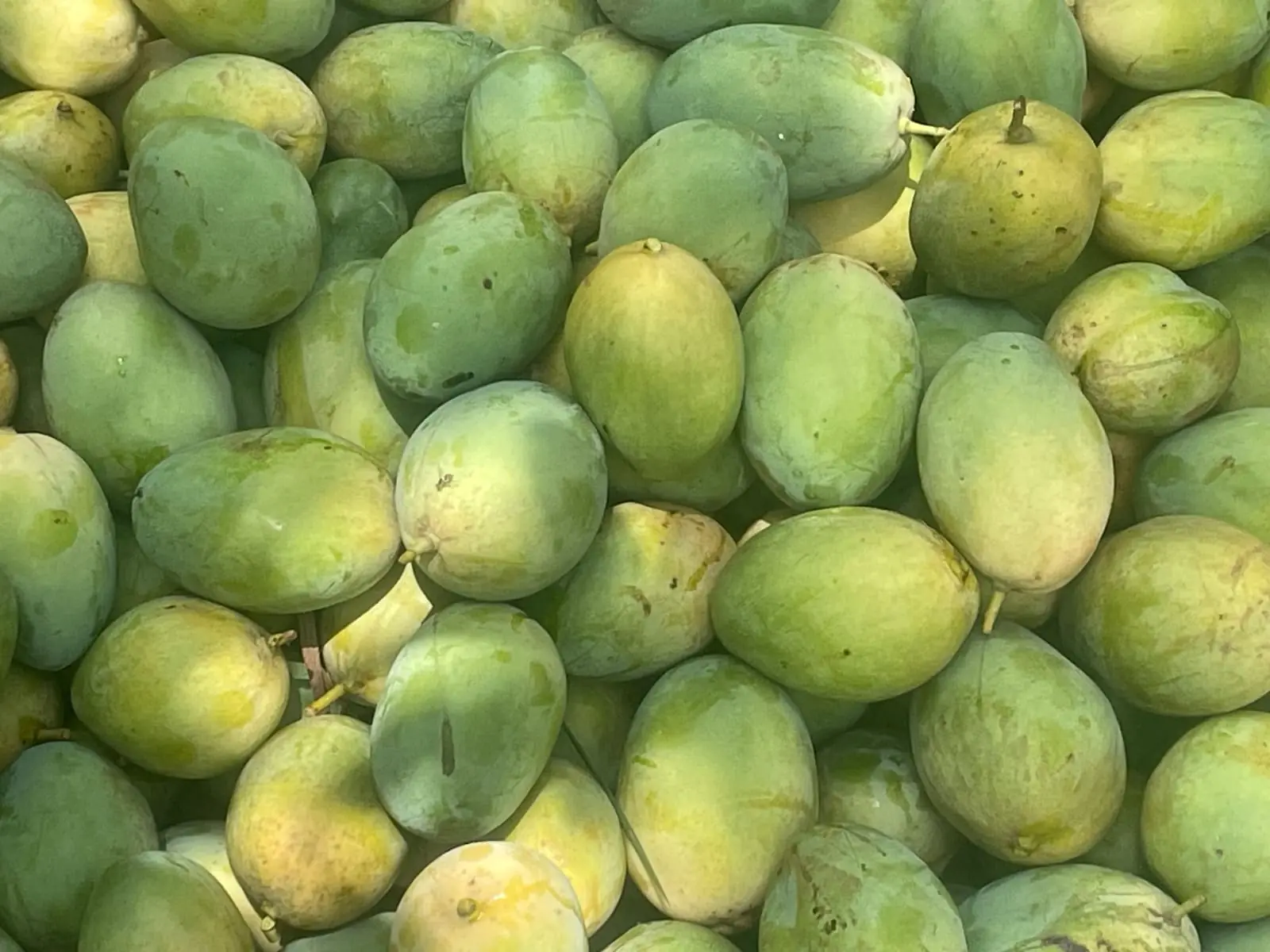 🥭
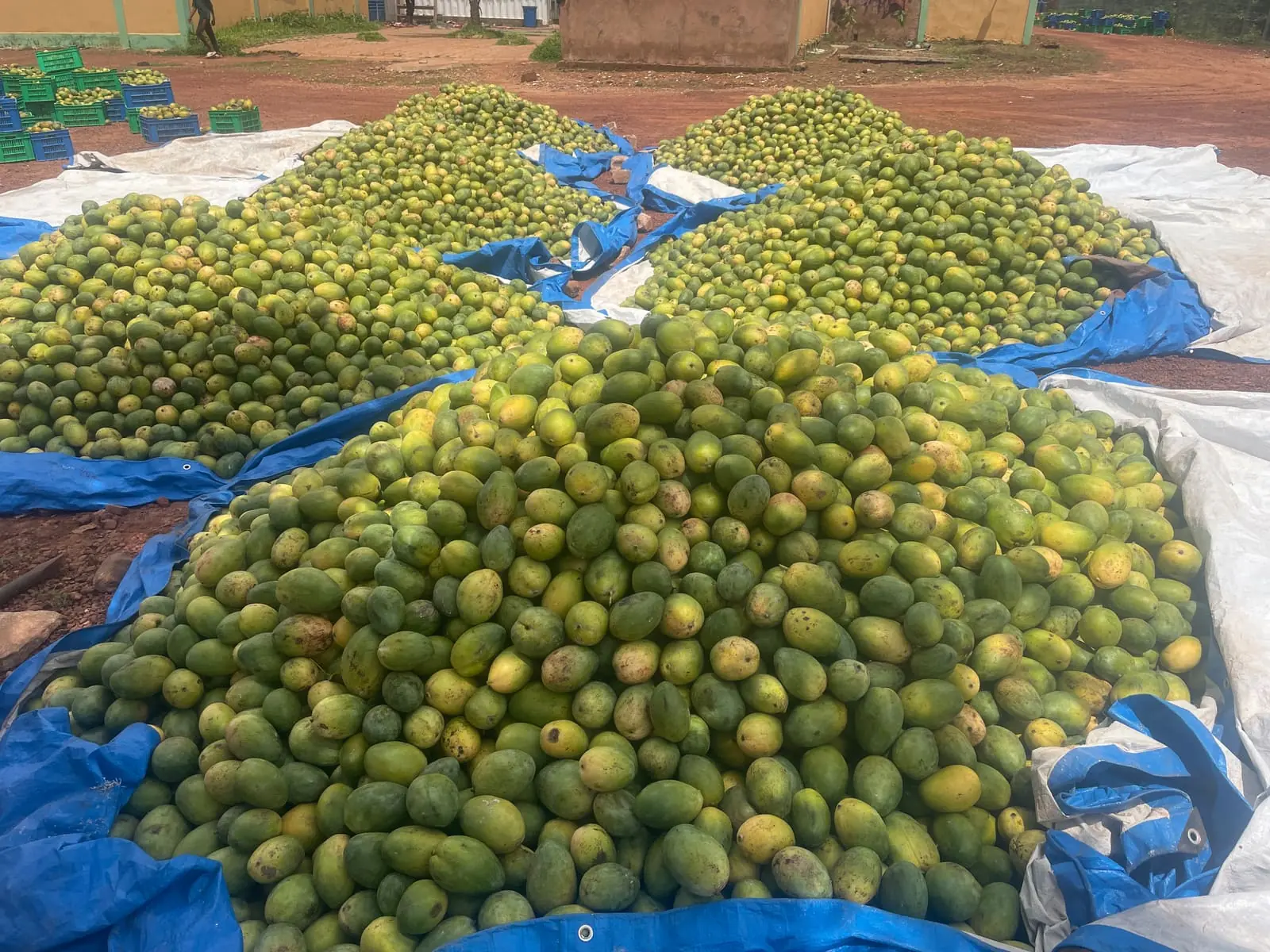
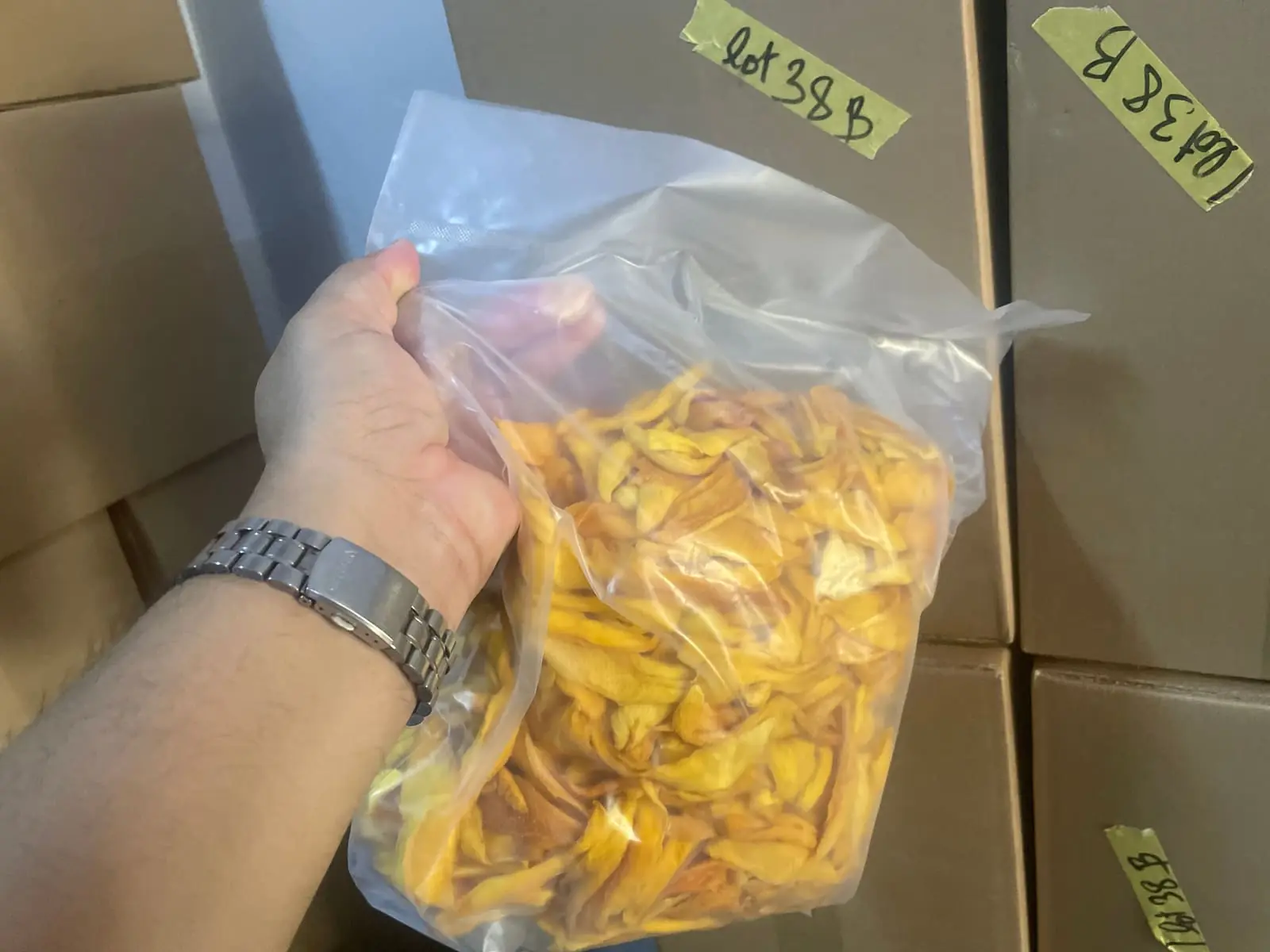
🥭Our founding application. 65–70 °C, 16–20 h, 12–14% final moisture for export-grade dried mango.
Primary focus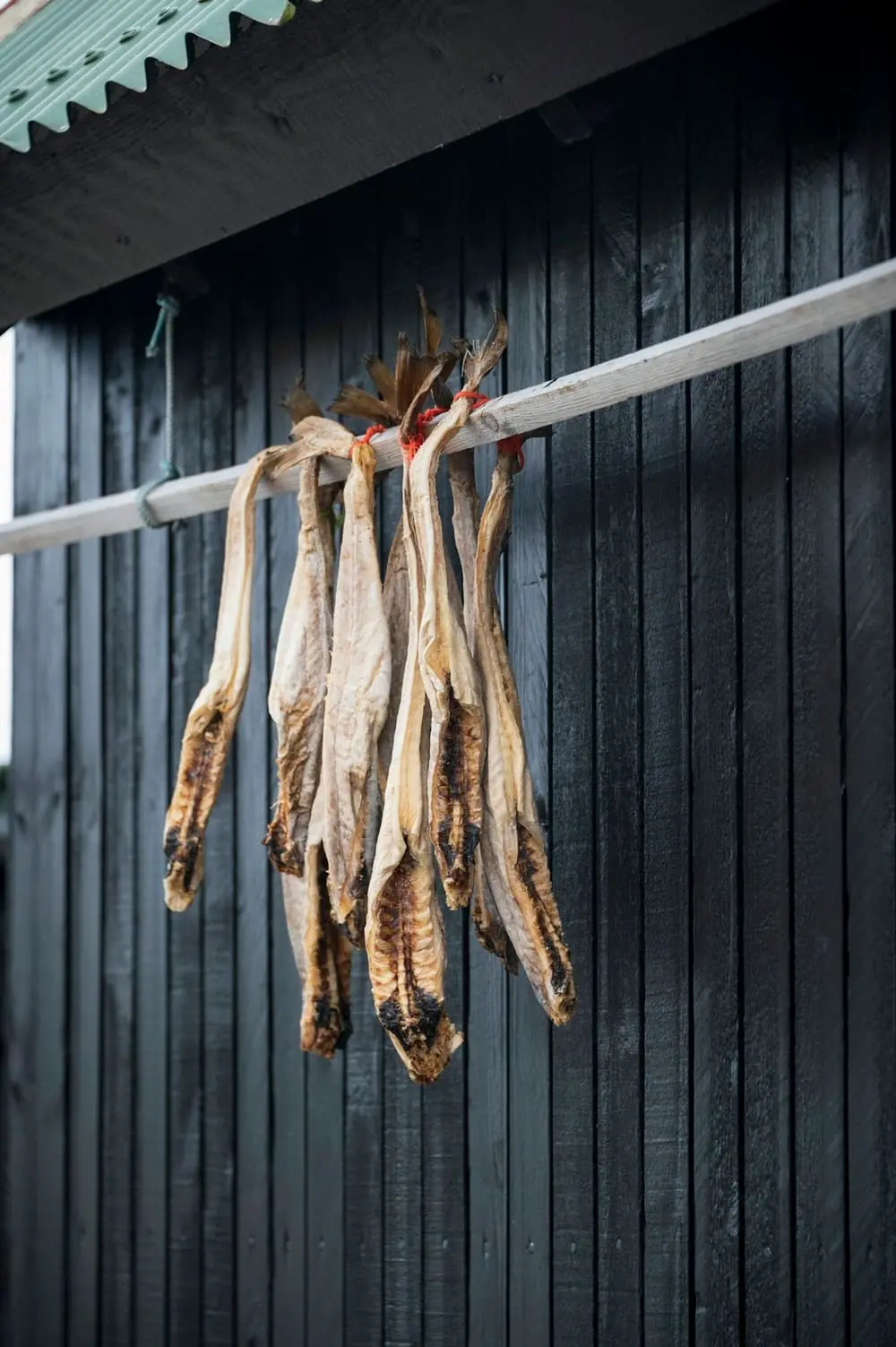 🐟
🐟Hygienic 45–50 °C drying with managed humidity — consistent, documented, batch after batch.
High demand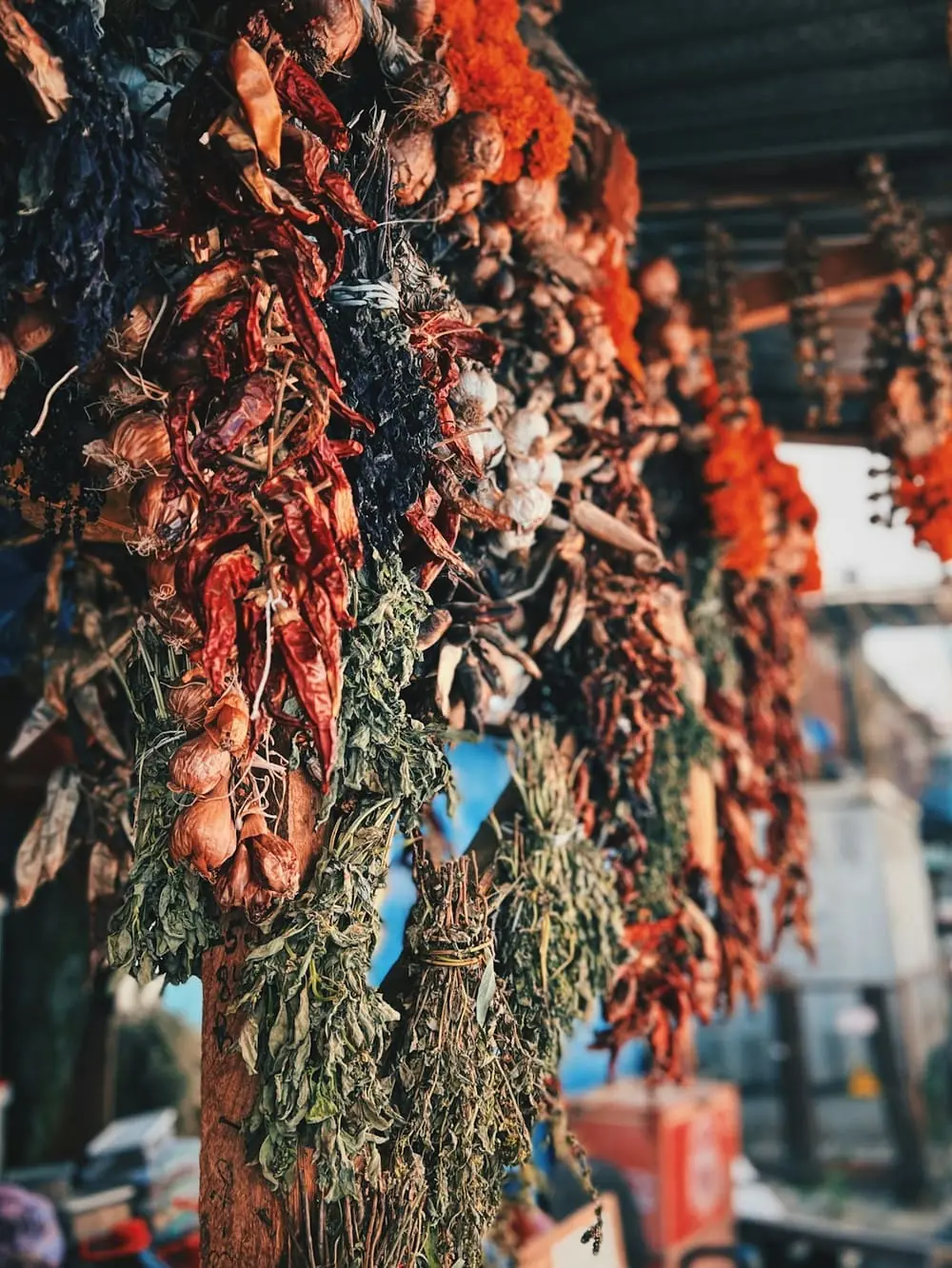 🥬
🥬Pineapple, banana, tomato, chilli, ginger and onion — flexible temperature profiles for every crop.
Versatile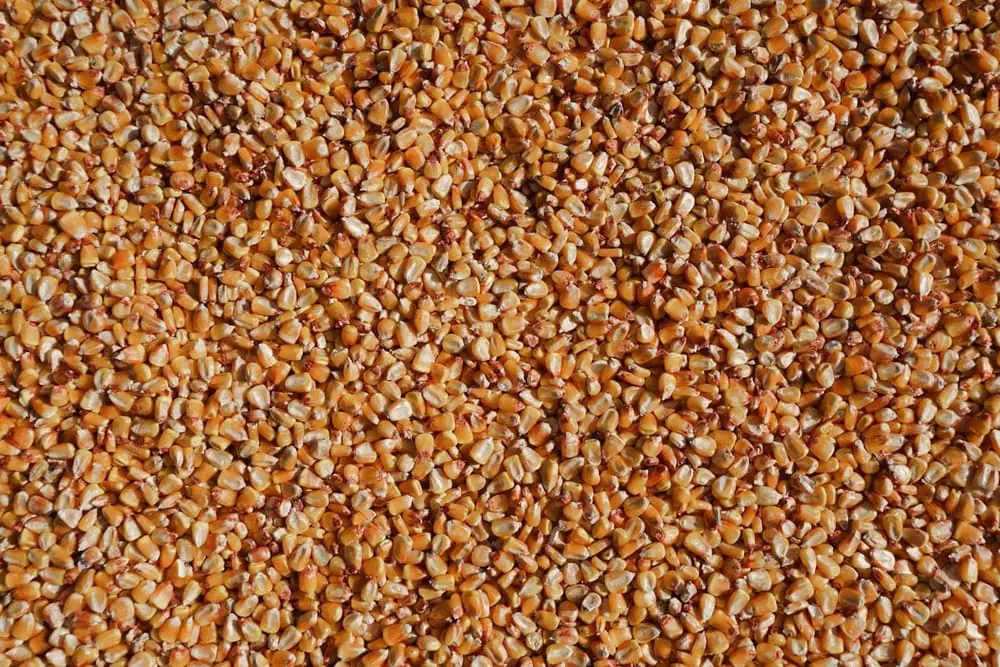 🌾
🌾Cereals, cocoa, coffee, cassava, spices and botanicals — reliable industrial-scale moisture control.
Year-roundThe full journey a mango operation runs every season — from a mountain of fresh mango to sealed, export-grade product on the shelf.
 Illustrative
 Illustrative
 Illustrative
 Illustrative
Cashew shells (or other biomass) are auto-fed into the refractory-lined combustion chamber.
A two-stage burn maximises energy release while a heat exchanger keeps combustion gases away from your food.
Filtered hot air circulates through the dryer at a PLC-controlled temperature and airflow.
Uniform, export-grade product comes out — with fuel costs and emissions a fraction of fossil-fuel drying.
We design for the realities of the region: a grid subject to interruption, seasonal harvests, and the need to fix things without waiting. Spare parts are dispatched alongside the machines and hands-on operator training is written into the scope, not bolted on afterwards.
Design setpoint · 118 °C📍 Banfora scenario · Burkina FasoIllustrative| Product | Temperature | Cycle | Final moisture |
|---|---|---|---|
| Mango | 65–70 °C | 16–20 h | 12–14 % |
| Fish and seafood | 45–50 °C | 24–30 h | 15–20 % |
| Fruits and vegetables | 50–70 °C | Varies by product | Product specific |
| Cocoa, coffee, cassava, spices | Product specific | Product specific | Product specific |
Most processors are sitting on their own fuel. Cashew processing yields shell. Mango processing yields peel. Groundnut, corn, cotton and rice all leave residue with usable calorific value.
| Fuel | Calorific value | Form |
|---|---|---|
| Cashew shell | 4,800 kcal/kg | Loose shell |
| Groundnut shell | 4,500 kcal/kg | Briquette, 90 × 90 mm |
| Dried mango peel | 4,200 kcal/kg | Briquette, 90 × 90 mm |
| Corn cob | 4,100 kcal/kg | Briquette, 90 × 90 mm |
| Cotton stalk | 3,900 kcal/kg | Briquette, 90 × 90 mm |
| Rice stalk | 3,800 kcal/kg | Briquette, 90 × 90 mm |
Wood pellets and commercial biomass pellets are equally acceptable. Substituting residue for diesel or LPG typically reduces drying fuel cost substantially — the actual figure depends on local fuel prices and is calculated per site, not quoted from a brochure. Compare biomass against diesel and LPG.
We design, supply, install and commission across West Africa — Burkina Faso, Côte d’Ivoire, Ghana, Senegal, Mali, Togo, Benin, Niger, Nigeria and Guinea-Bissau — and we supply beyond the region where the buyer covers team travel and permits.
We have one commissioned installation: a 900,000 kcal/h cashew shell burner firing the steam boiler at Premium Cashew Commodities Limited in The Gambia. It runs on empty cashew shell, the residue the factory already produces.
We have not yet built a drying line. The drying figures on this site are fully engineered design targets rather than measured results, and a mango demonstration unit is planned in Burkina Faso. Our specifications, fuel ranges and stated limitations are real — we would rather you knew exactly which parts are proven at the enquiry stage than after commissioning.
One system has been commissioned so far: a 900,000 kcal/h cashew shell burner firing a steam boiler at Premium Cashew Commodities Limited in The Gambia, on the factory’s own empty shell. It is a boiler application — no drying line has been built anywhere yet, so every drying figure on this site remains an engineered design target. The configuration is published in full, and the measured performance deliberately is not, on the page for the PCCL installation in The Gambia.
Biomass burners from 200,000 to 900,000 kcal/h, specified against your calculated heat demand rather than sold from a fixed catalogue. Tunnel chambers are typically 1,500 kg per batch, and plants are configured from a single chamber upward. The generator between them moves 2,500 to 3,000 m³/h and delivers air across a controlled 50 to 150 °C.
Cashew shell is the primary design fuel. Specified alternatives are briquetted groundnut shell (4,500 kcal/kg), mango peel (4,200), corn cob (4,100), cotton stalk (3,900) and rice stalk (3,800), plus wood and commercial pellets in 6–8 mm. All fire in the same burner without mechanical change; feed rate, ash volume and cleaning interval shift between them.
Manufacturing runs 10–18 weeks from confirmed order and receipt of advance payment, before shipping and installation. Site survey and design sizing happen before that clock starts, so the useful question at enquiry is how soon the survey can be booked rather than how fast the build can run. Warranty is 12 months from date of shipment.
No. Heat moves through an air-to-air heat exchanger and combustion gas is exhausted separately, so the air reaching your product — controlled anywhere between 50 and 150 °C — has never touched the flame. This is what makes the system suitable for food-grade drying, and it is why we do not offer direct-fired drying for food at all.
“We’re a new company, and we’d rather earn your trust than borrow it. Every line we quote is engineered in full first — sized to your harvest, your fuel and your buyers — and delivered with operator training and spare parts dispatched alongside the machines. Judge us on the depth of the design, not on a wall of logos.”
Share a few details and a drying engineer will come back with a recommended configuration, throughput estimate and fuel-cost projection — no obligation.