Industrial mango drying systems — 1,500 kg per batch
Turning a six-week harvest into a twelve-month product.
An industrial mango drying system reduces sliced fresh mango to a stable 12–14 % moisture without losing colour or flavour. Lines run at 65–70 °C on 16–20 hour cycles and handle 1,500 kg per chamber. About 10 kg of whole fresh fruit yields 1 kg of dried product, after peel and stone removal and at roughly 85 % process yield.
The mango problem is a timing problem. Fruit arrives in overwhelming volume across a short window, prices collapse when supply peaks, and a large proportion of the crop is lost for want of anywhere to put it. Controlled drying converts that glut into a stable product with a twelve-month shelf life.
Mango drying using our cashew shell burner
A dryer only moves hot air about; what decides the running cost is how that air is heated. The burner runs on cashew shell — a processing residue that arises in the same regions as the mango crop, and often on the same site. The animation traces the path: hopper, feed screw, blower, combustion chamber, and the hot air delivered to the dryer.
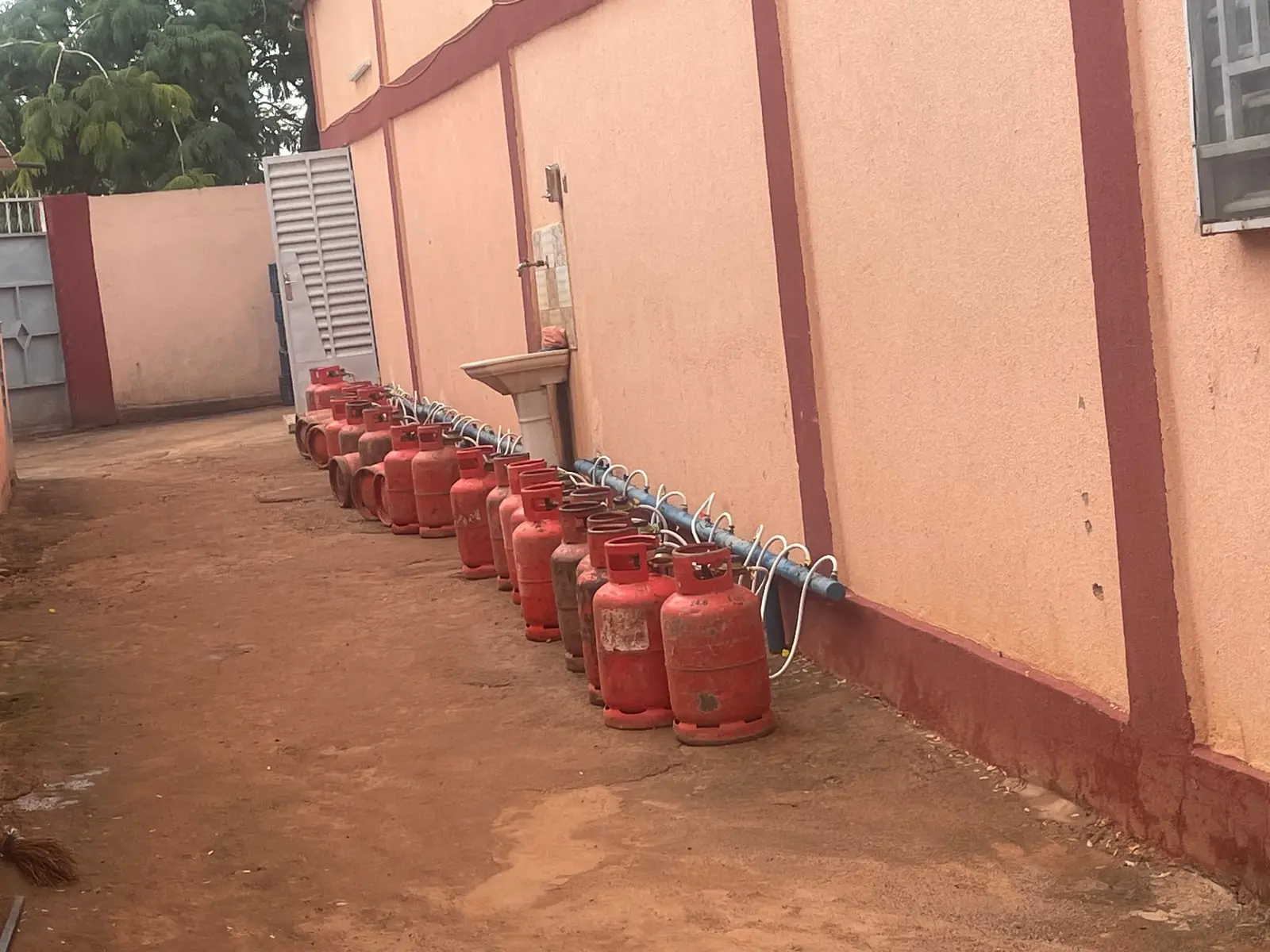
This is the part of the plant that replaces gas. In drying units across the region the heat still comes mostly from LPG cylinders trucked in, priced against a world market and delivered on fragile logistics. Cashew shell is produced a few kilometres away.
 🥭 Fresh intakeIllustrative
The mango process window
A narrow window, held precisely.
The temperature band is narrower than it looks. Below 65 °C the cycle extends far enough that microbial growth becomes a genuine risk during the slow early phase. Above 70 °C the fruit sugars begin to caramelise, darkening the product and shifting flavour away from fresh mango toward cooked. The band exists for good reasons at both ends.
| Parameter | Value |
|---|---|
| Slice thickness | 5–8 mm |
| Initial moisture | ~85% |
| Final moisture | 12–14% |
| Loading density | 35–40 kg/m² |
| Drying temperature | 65–70 °C |
| Air velocity | 2.5–3.0 m/s |
| Relative humidity | 30–40% |
| Cycle time | 16–20 hours |
| Batch capacity | 1,500 kg per chamber |
| Product yield | ~85% |
The temptation, with the yard full of fruit and the season closing, is to raise the setpoint and shorten the cycle. That is precisely what does not work: the surface dries faster than water can migrate out of the centre, the crust closes, and the batch strands somewhere in the high twenties however long it is left in the chamber. The curve below shows both paths.
Which mangoes dry well
Not every mango makes a saleable dried slice. Two characteristics decide it: fibre, which is visible and palpable the moment it passes a certain threshold, and flesh firmness, which determines whether a 6 mm slice holds its shape all the way to the tray. Sugar content affects final texture and how much temperature headroom you have — a very sweet mango caramelises sooner.
Varietal succession is also what gives the campaign its length. A unit working only Amélie runs for six weeks; running the sequence through to Keitt, the same chamber works for close to four months.
| Variety | Season | Brix (°Bx) | Fibre | Slice behaviour |
|---|---|---|---|---|
| Amélie | Mar–Apr | 14–16 | Very low | Holds an even 6 mm slice; the reference variety for the early campaign. |
| Lippens | Apr–May | 15–17 | Low | Soft flesh; slice nearer 8 mm to avoid breakage. |
| Springfels | Apr–May | 14–16 | Moderate | Fibre stays visible in the dried strip; standard grade rather than premium. |
| Brooks | May–Jun | 13–15 | Low to moderate | Firm flesh, good cutting yield. |
| Kent | May–Jun | 15–17 | Very low | The best slice integrity; the backbone of the export campaign. |
| Palmer | May–Jun | 14–16 | Very low | Elongated fruit, gives long even strips. |
| Keitt | Jun–Jul | 14–16 | Very low | Firm at maturity; this is the one that extends the campaign. |
| Valencia | Jun–Jul | 15–17 | Low | Elongated, high strip yield. |
| Local types (Sabot and similar) | Mar–Jun | 12–15 | High | Too fibrous for strips; better directed to purée, juice or livestock feed. |
Season windows are indicative for the West African Sudanian zone and shift a fortnight either way with the rains. Brix and fibre are order-of-magnitude ranges from published variety descriptions, not measurements taken on your fruit — calibrate against your own intake.
Pre-treatment: what protects the colour
Mango browns when cut, and it browns quickly. The enzyme responsible — polyphenol oxidase — acts on the freshly cut surface in the presence of oxygen, and it does so within tens of minutes, long before the chamber has begun its work. A dryer does not undo enzymatic browning that has already taken hold; it fixes it in place.
| Treatment | Typical use | What it does | Worth knowing |
|---|---|---|---|
| Citric acid dip | 0.5–1 % w/v, 3–5 min | Lowers pH below the optimum for polyphenol oxidase and slows browning. | The most widely used; carries no declaration requirement. |
| Ascorbic acid | 0.2–0.5 % w/v | Reduces quinones before they polymerise into brown pigments. | Often combined with citric; it is consumed as the dip is used. |
| Metabisulphite | Short dip | Very effective on both colour and keeping quality. | Above 10 mg/kg residual SO₂ it must be declared in the EU. Many buyers decline it on principle. |
| Osmotic pre-treatment | Sucrose syrup | Gives a softer texture and a sweeter product. | Changes what the product is: no longer a no-added-sugar dried mango. |
| Cut-to-tray delay | Under 15 minutes | The most effective lever available, and the only one that costs nothing. | A slice that sits in a tub for an hour has already lost first grade. |
Pre-treatment is part of the process specification, not part of the dryer. What the dryer contributes is holding 65–70 °C steadily on an even slice, which protects colour substantially on its own. The rest is decided between the knife and the tray.
Defects and their corrections
Five defects account for most downgraded batches. None of them is mysterious, and none can be corrected after the fact — they are prevented by the settings.
| Defect | What you see | Cause | Correction |
|---|---|---|---|
| Case hardening | Hard crust, wet centre; weight loss stalls. | The surface dries faster than water migrates out of the centre. | Stage 68 → 65 °C, hold 30–40 % RH through the first four hours, air at 2.5–3.0 m/s. |
| Enzymatic browning | Dull brown edges within an hour of cutting. | Polyphenol oxidase on the cut surface. | Dip within 15 minutes; citric acid 0.5–1 %; shorten the wait before loading. |
| Caramelisation | Dark, sticky product with a cooked flavour. | Exceeding 70 °C on high-Brix fruit. | Cap at 70 °C and drop the setpoint on very sweet late varieties. |
| Sugar bloom | White crystalline haze appearing after packing. | Sugar migrating to the surface; packed warm, or dried too far. | Cool to ambient before packing; target 12–14 %, not below. |
| Storage mould | Growth after several weeks in the bag. | Water activity above about 0.65, or an uneven batch. | Check aᵥ, not just average moisture; equalise the batch before packing. |
| Uneven batch | Some trays finished, others still wet. | Mixed maturity, uneven loading, airflow short-circuit. | Grade on maturity at intake; 35–40 kg/m²; check the gaps between trays. |
Pre-processing equipment requirements
- Fruit washing stations with potable water supply.
- Sorting tables for maturity grading — mixing maturity stages in one batch produces mixed results, the most common avoidable quality failure.
- Stainless-steel cutting and slicing stations.
- Dip tanks sized to absorb the output of the cutting line without creating a queue.
- Quality inspection points, sanitising stations and temporary storage racks.
- Transfer trays and loading carts.
Quality metrics
- Colour retention — the primary visual buying signal for dried mango.
- Texture profile — pliable rather than brittle or leathery.
- Moisture uniformity — consistency across the batch, not just average.
- Water activity — below about 0.65; this, rather than average moisture, is what decides storage stability.
- Microbial safety — validated against international Codex food-safety standards ↗.
- Nutritional retention — vitamin and carotenoid preservation.
The mango trade as it operates today
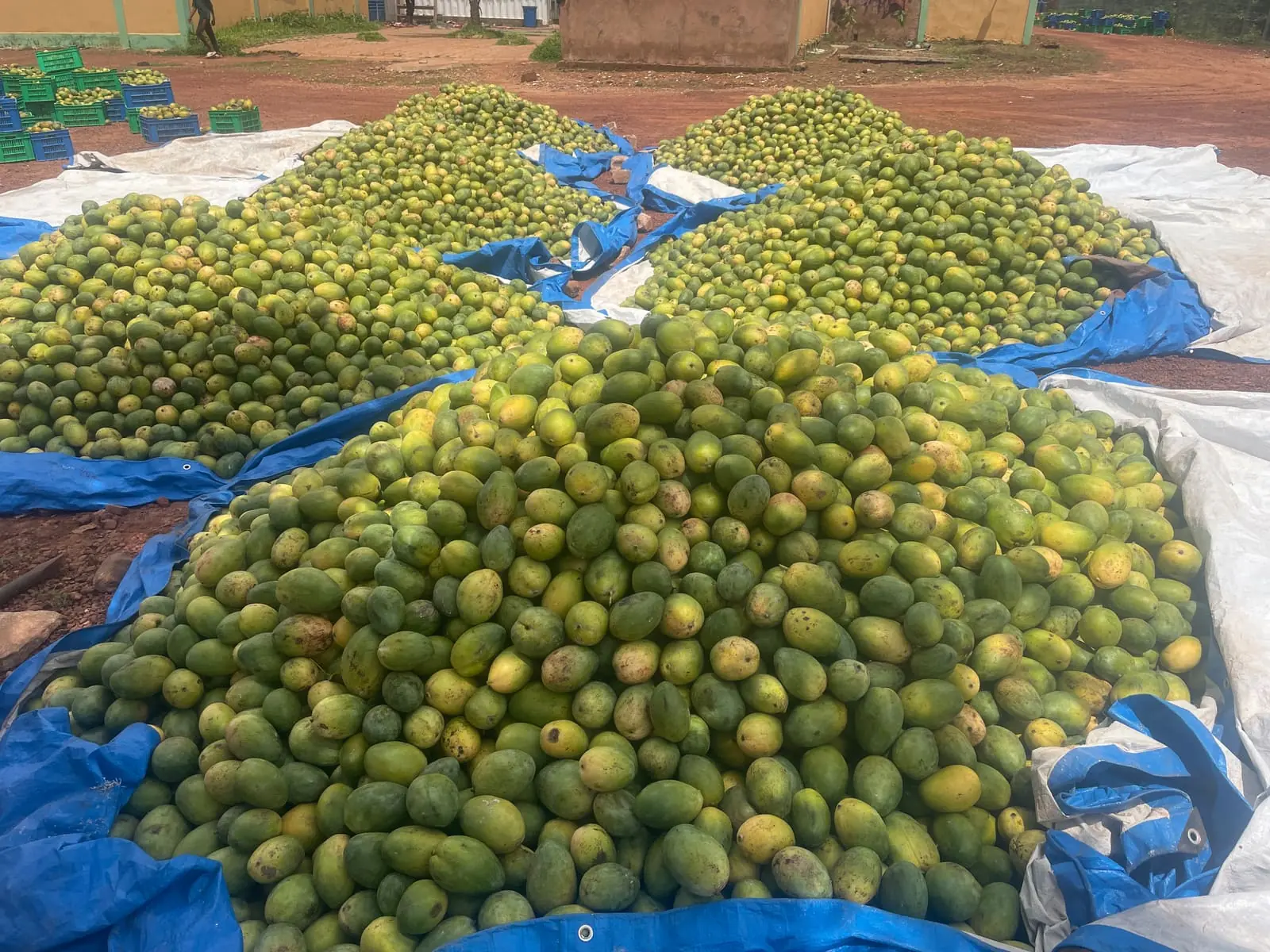
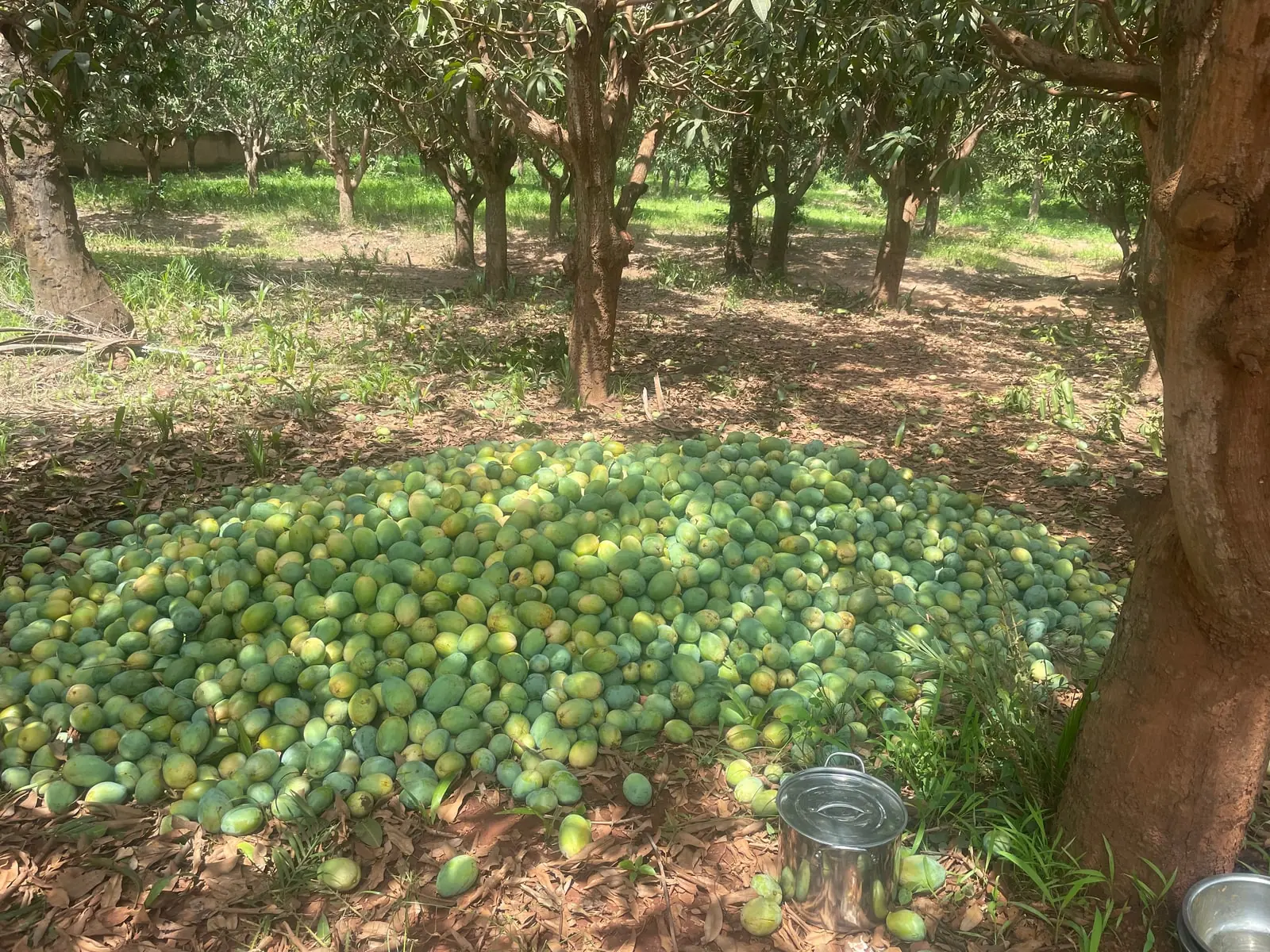
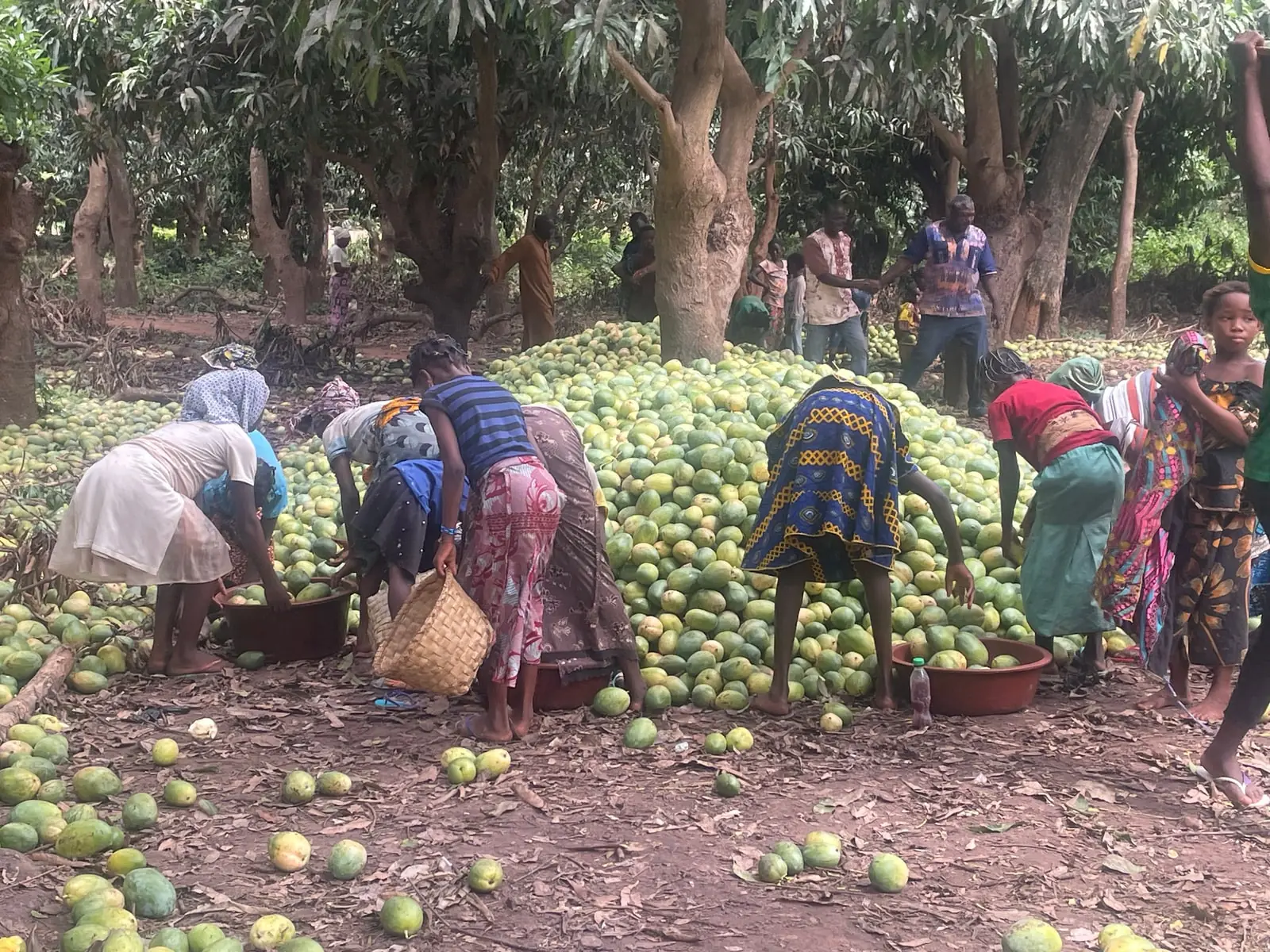
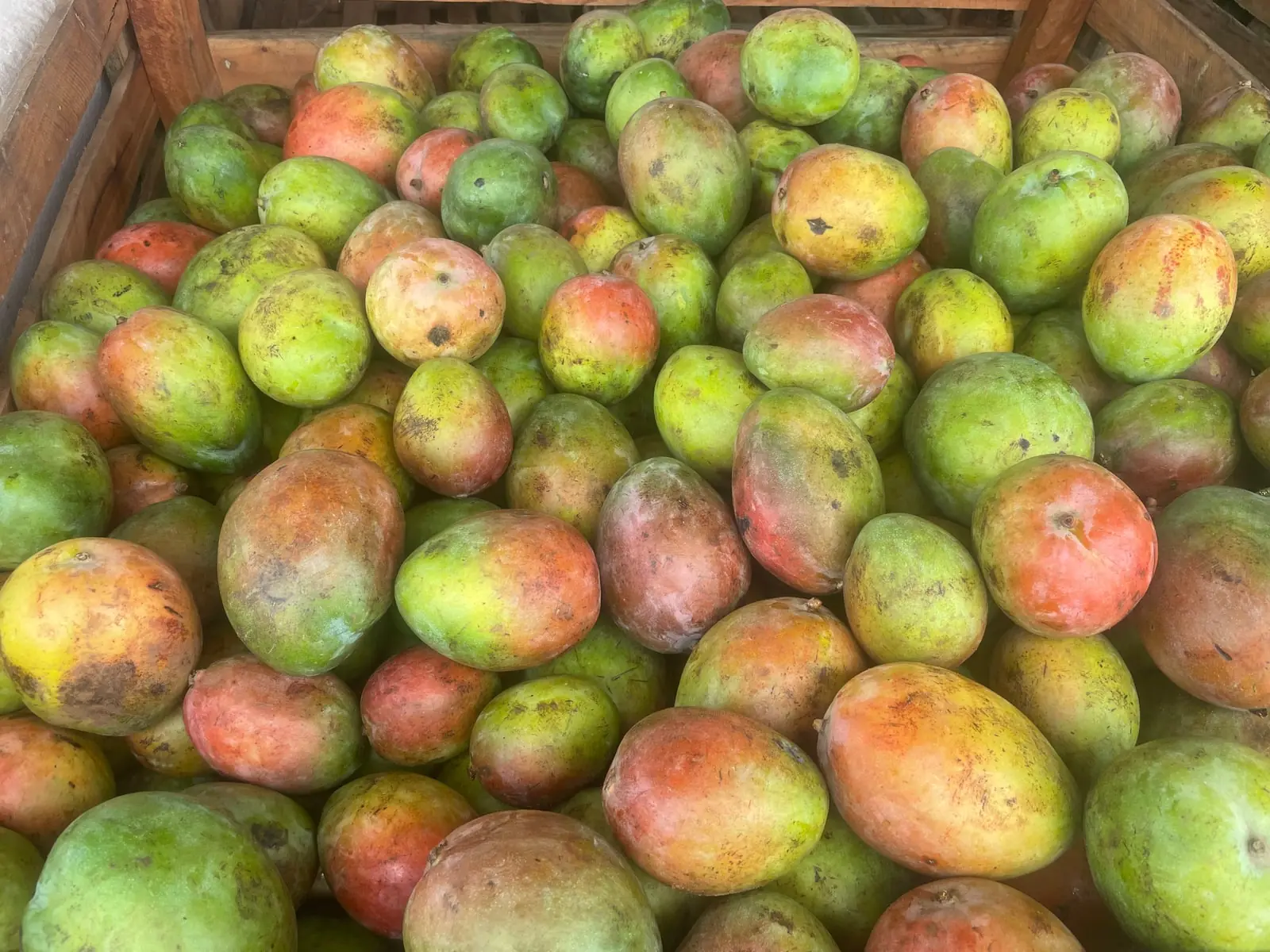
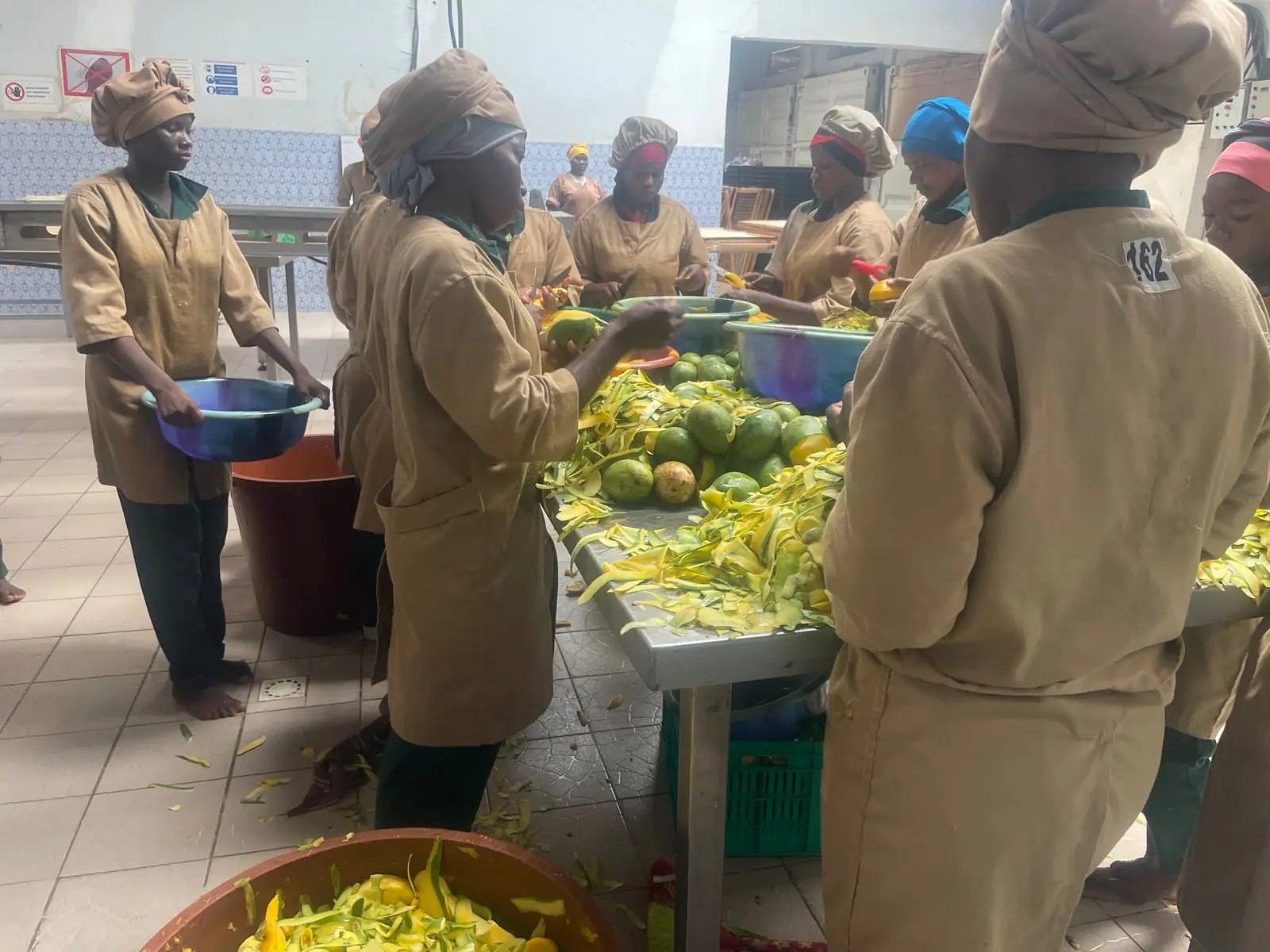
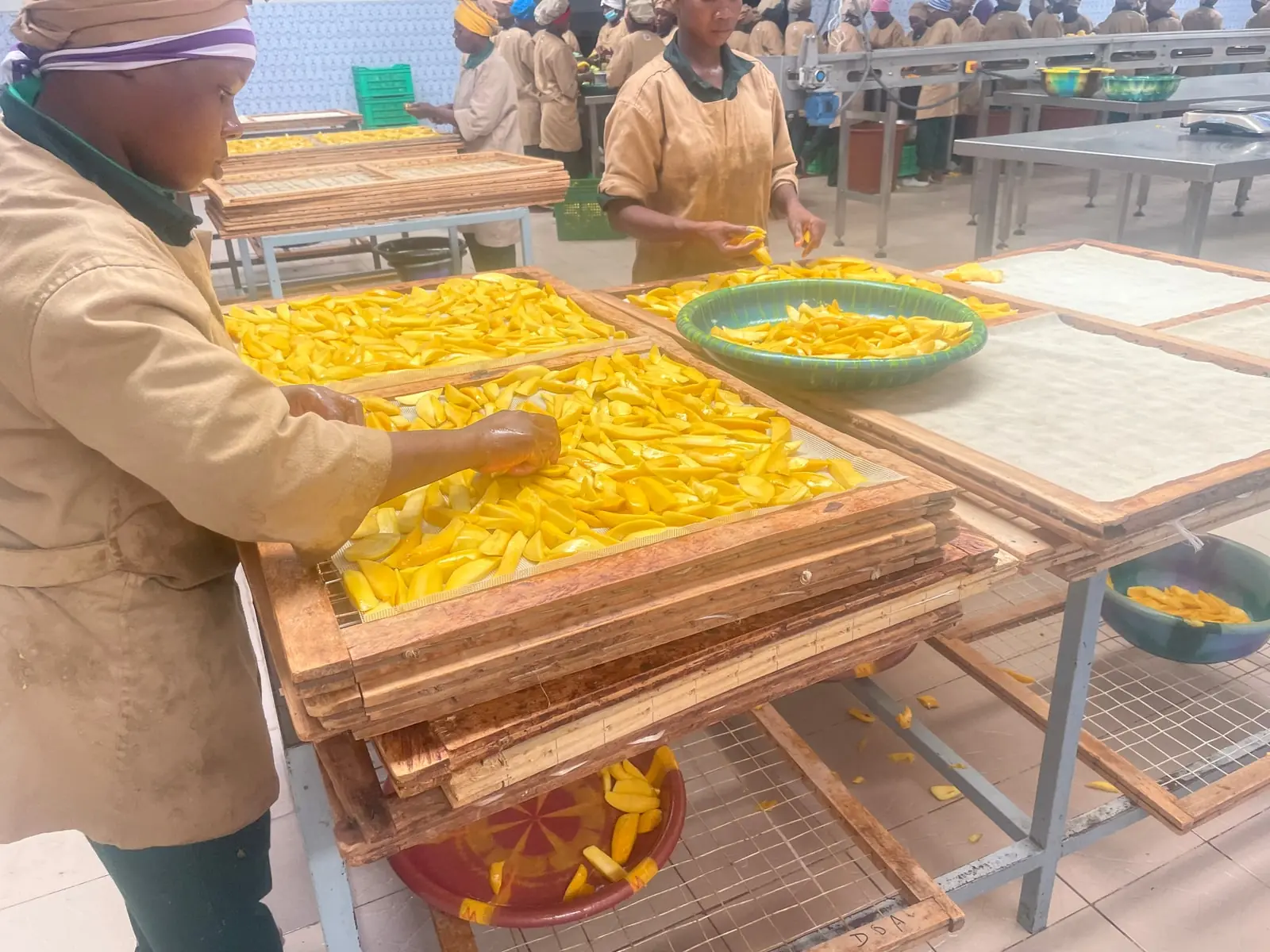
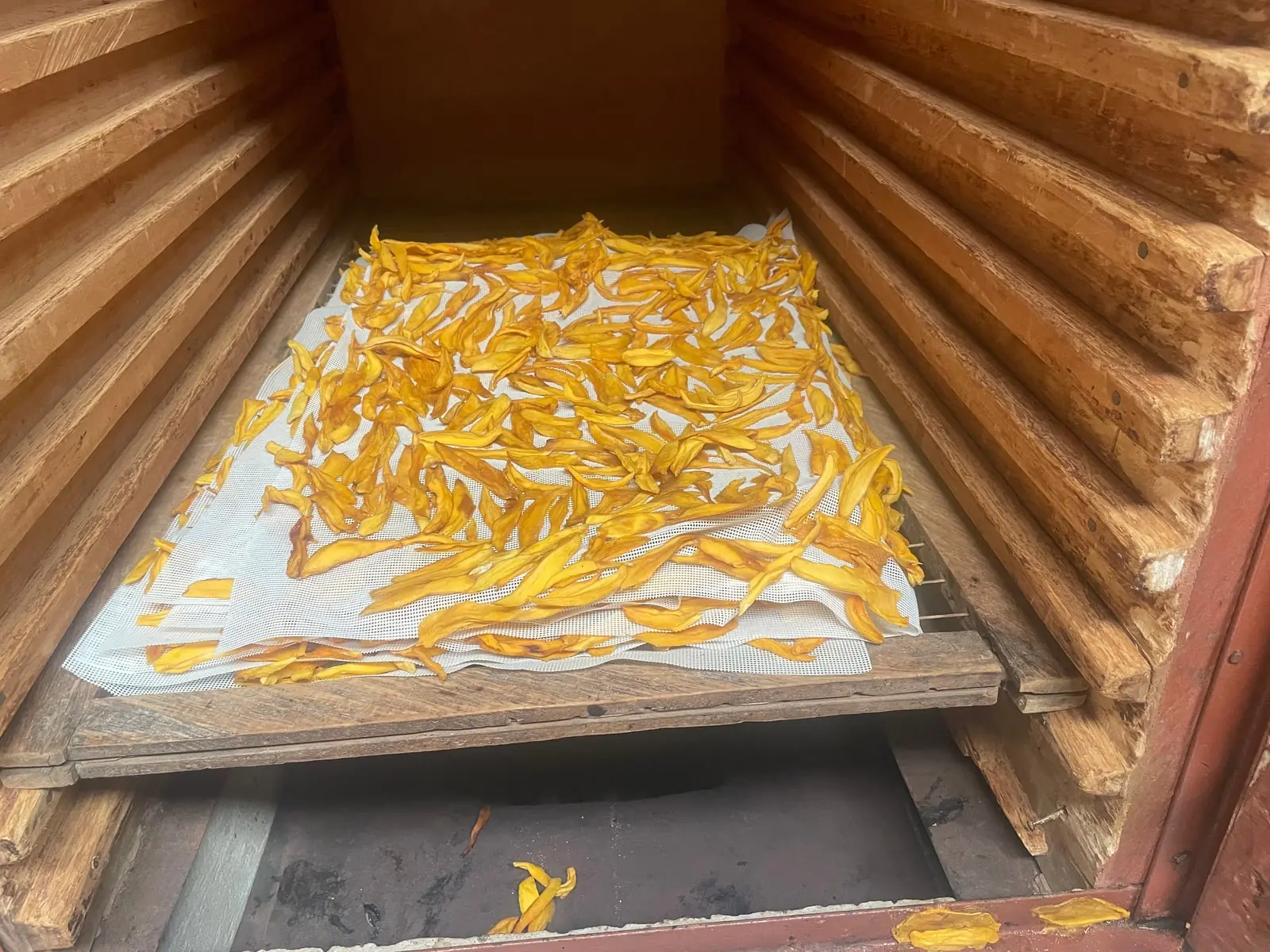
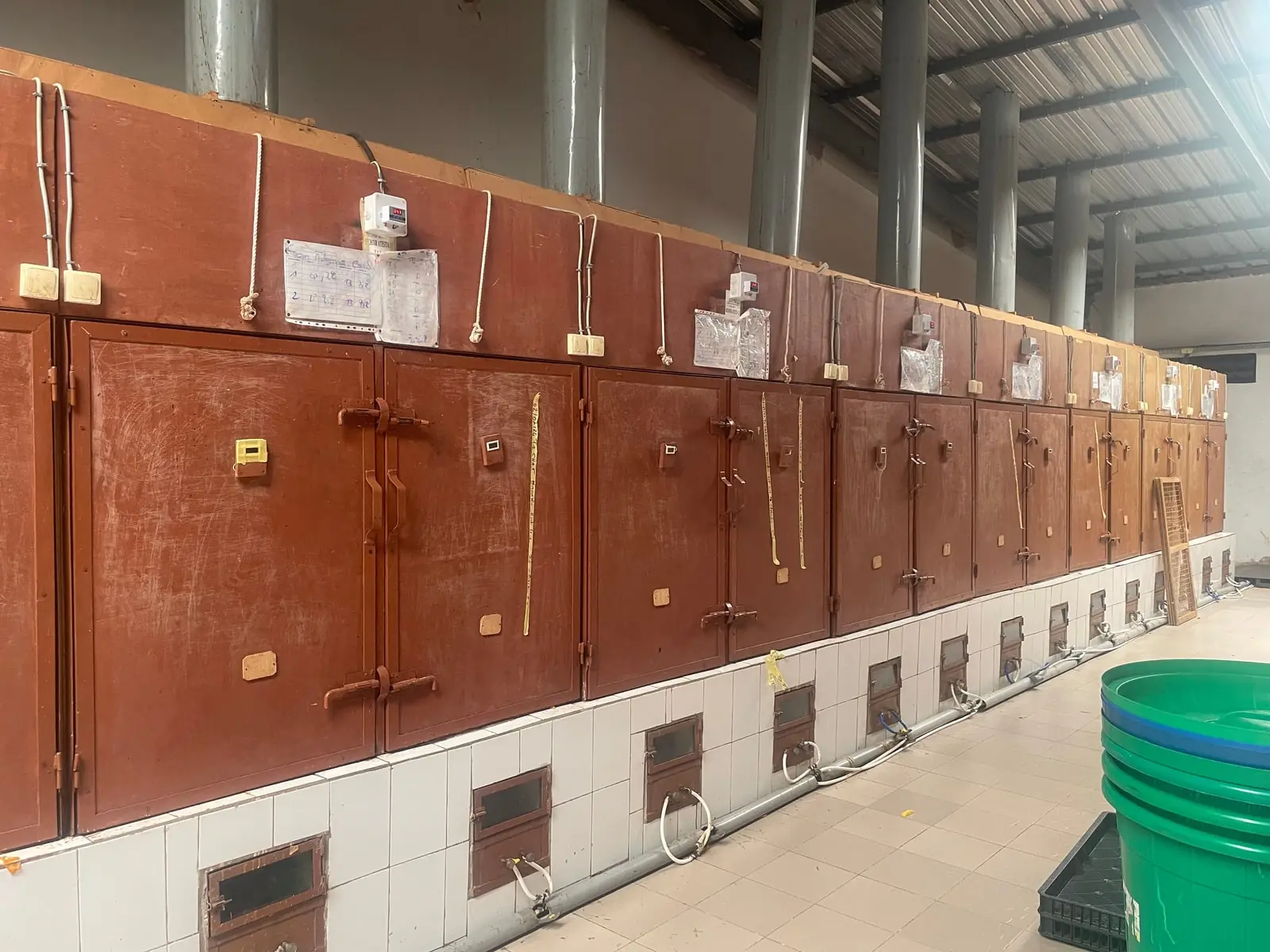
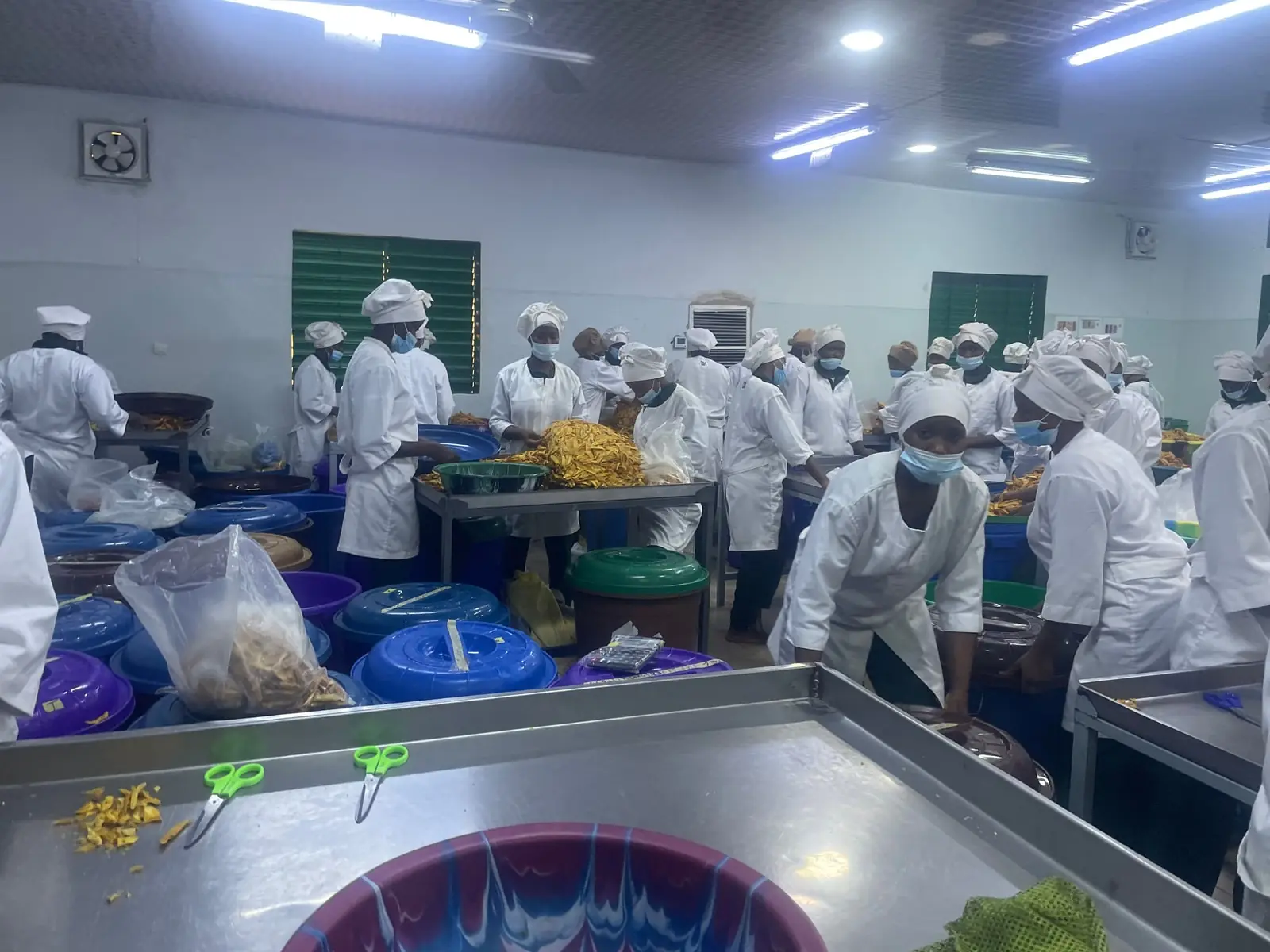
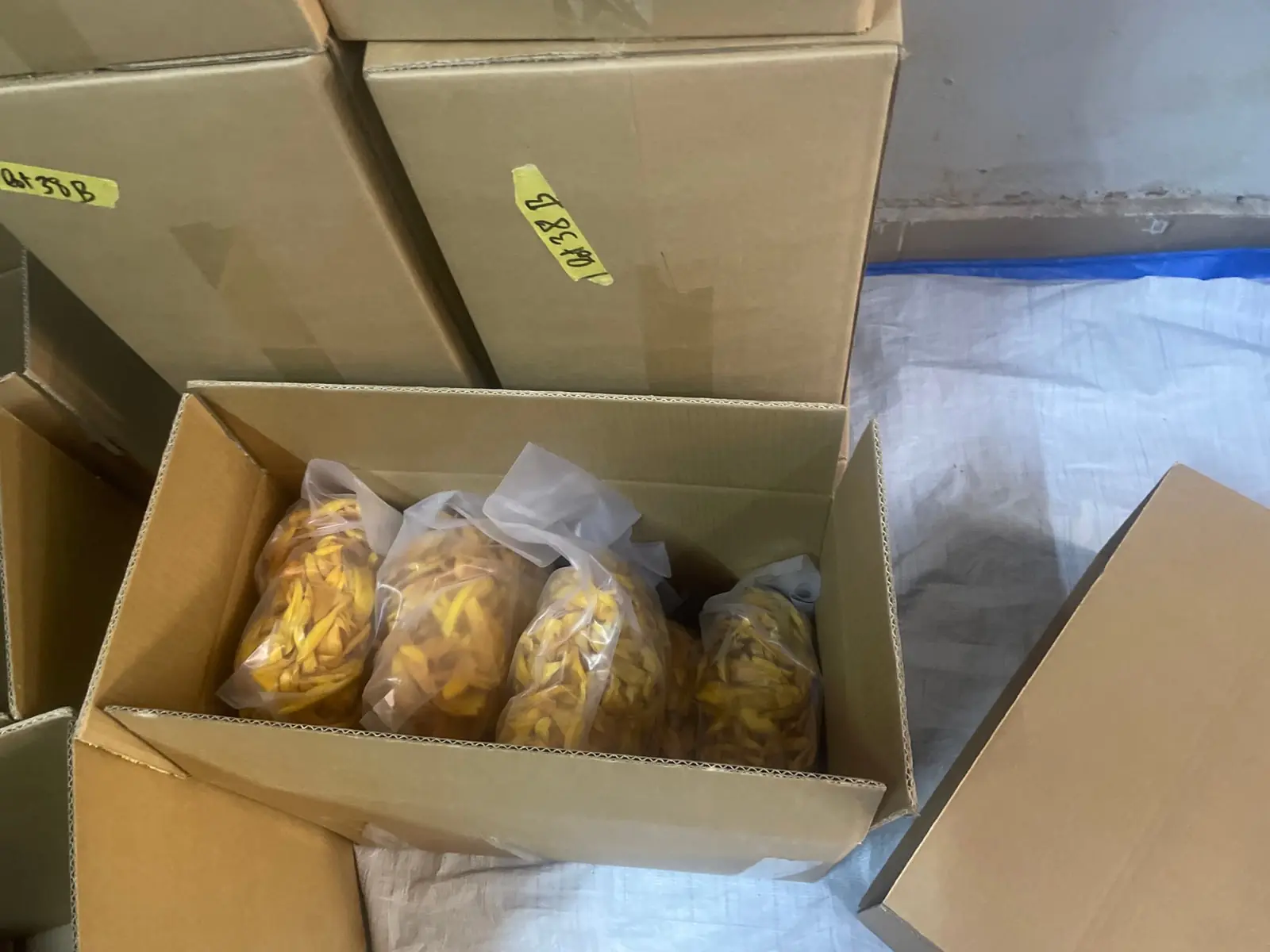
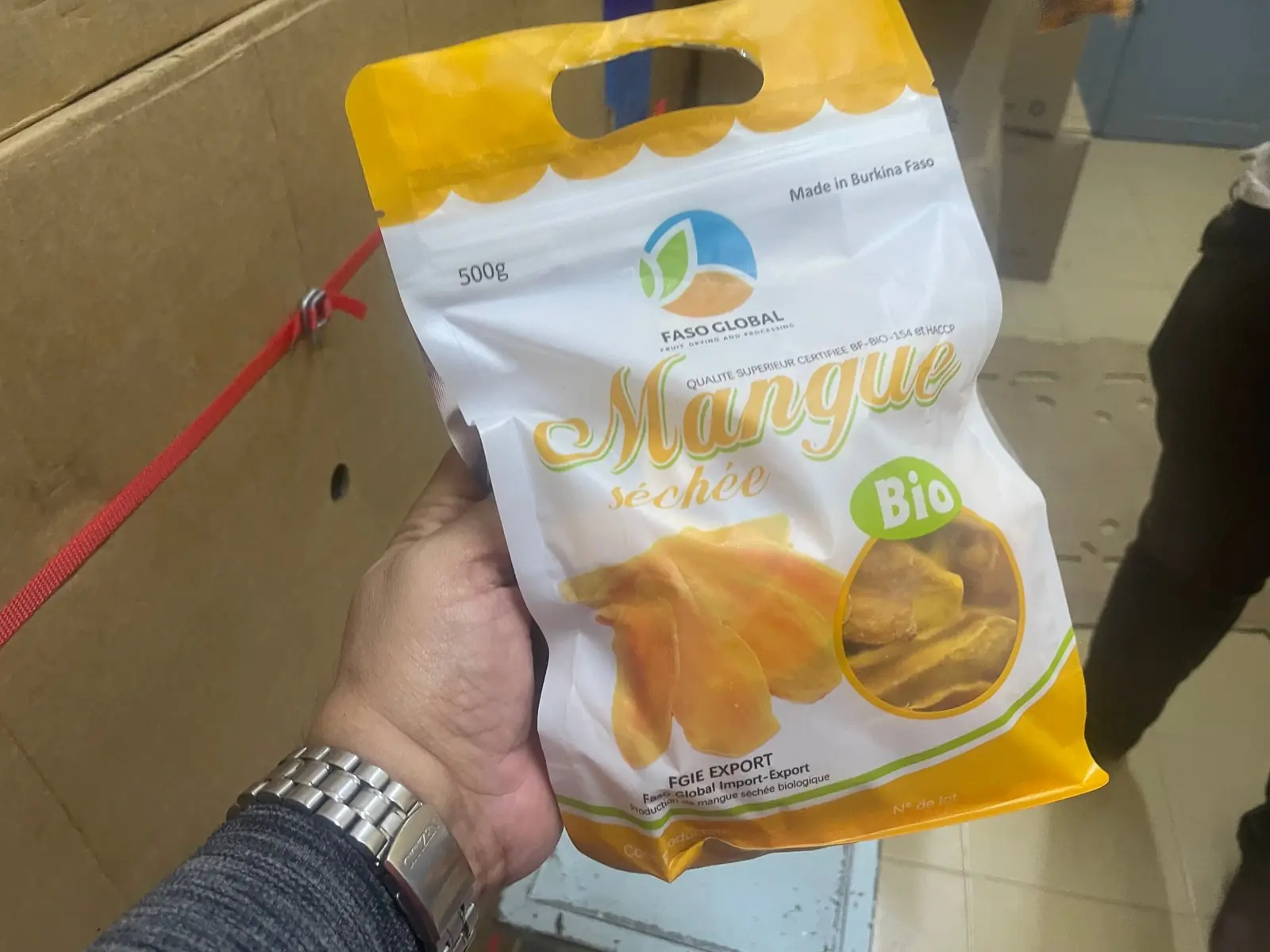
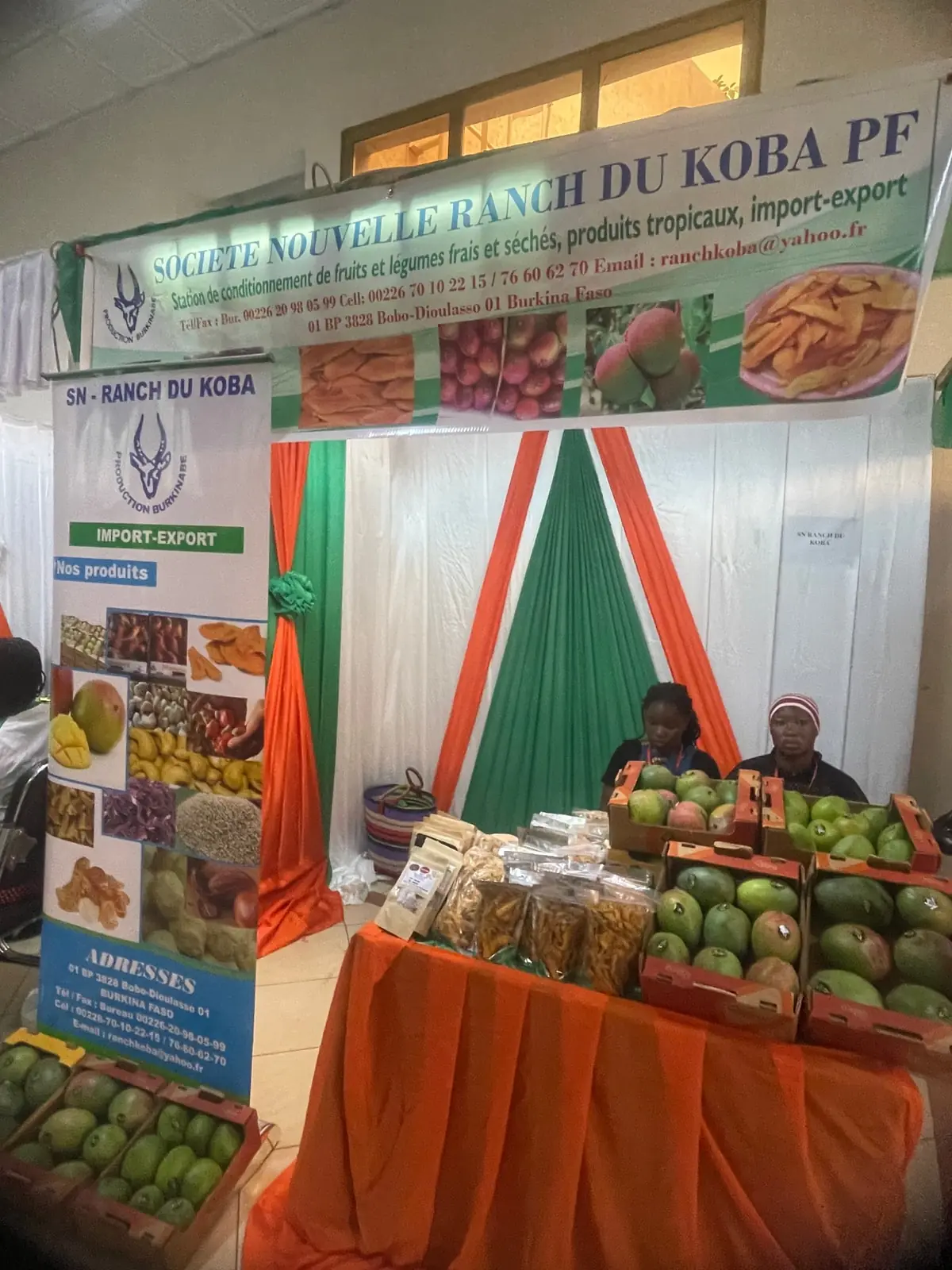
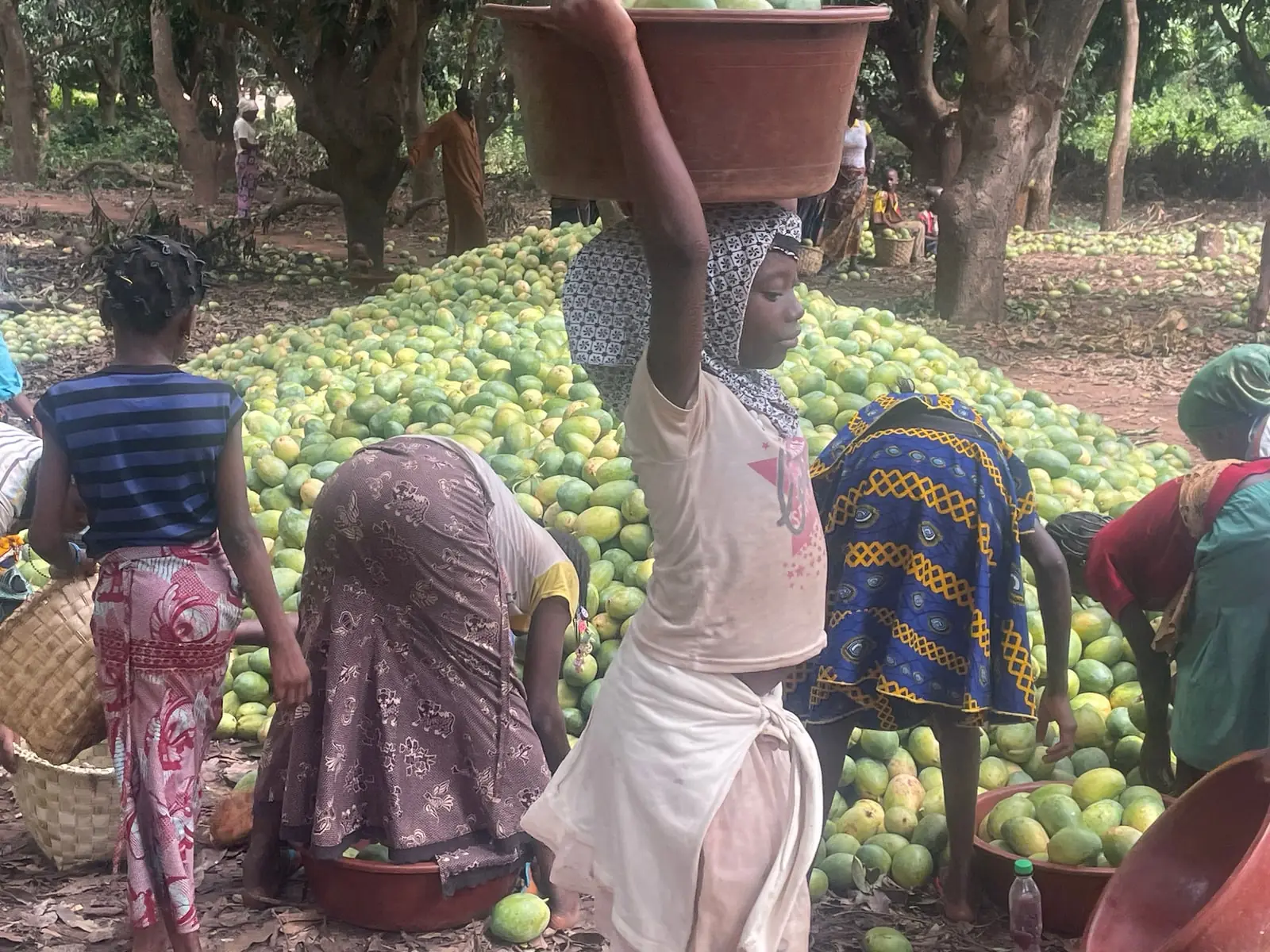
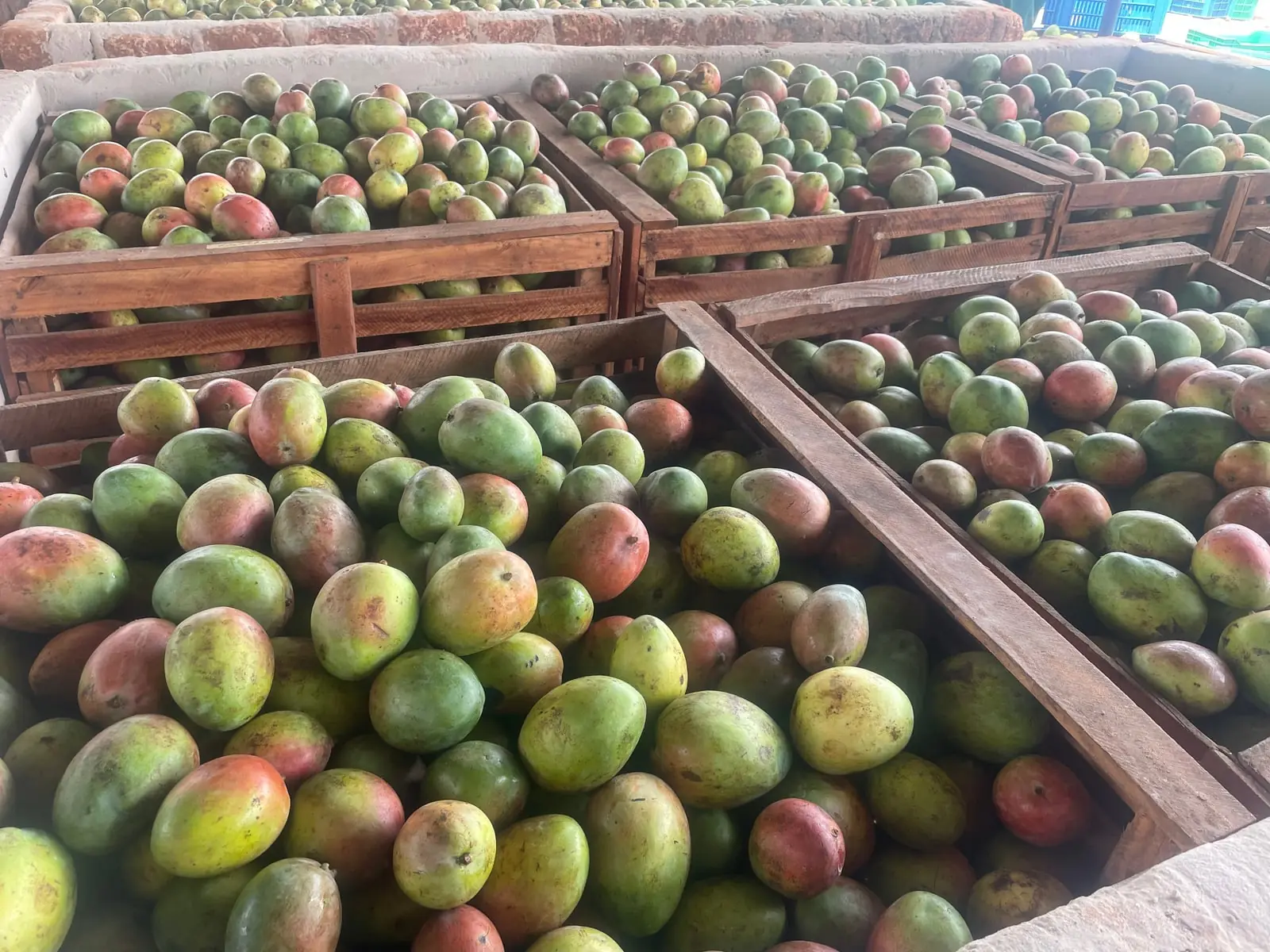
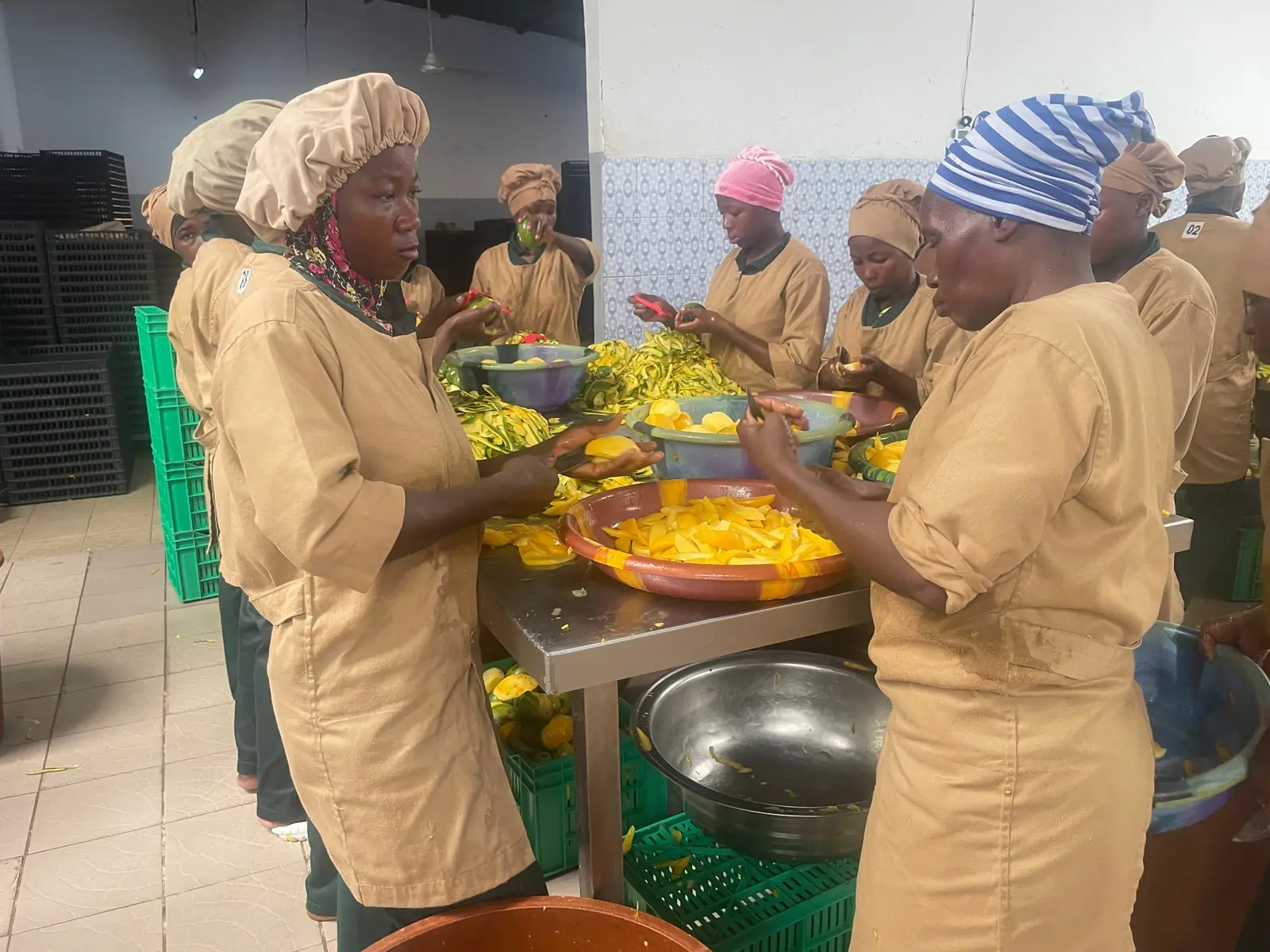
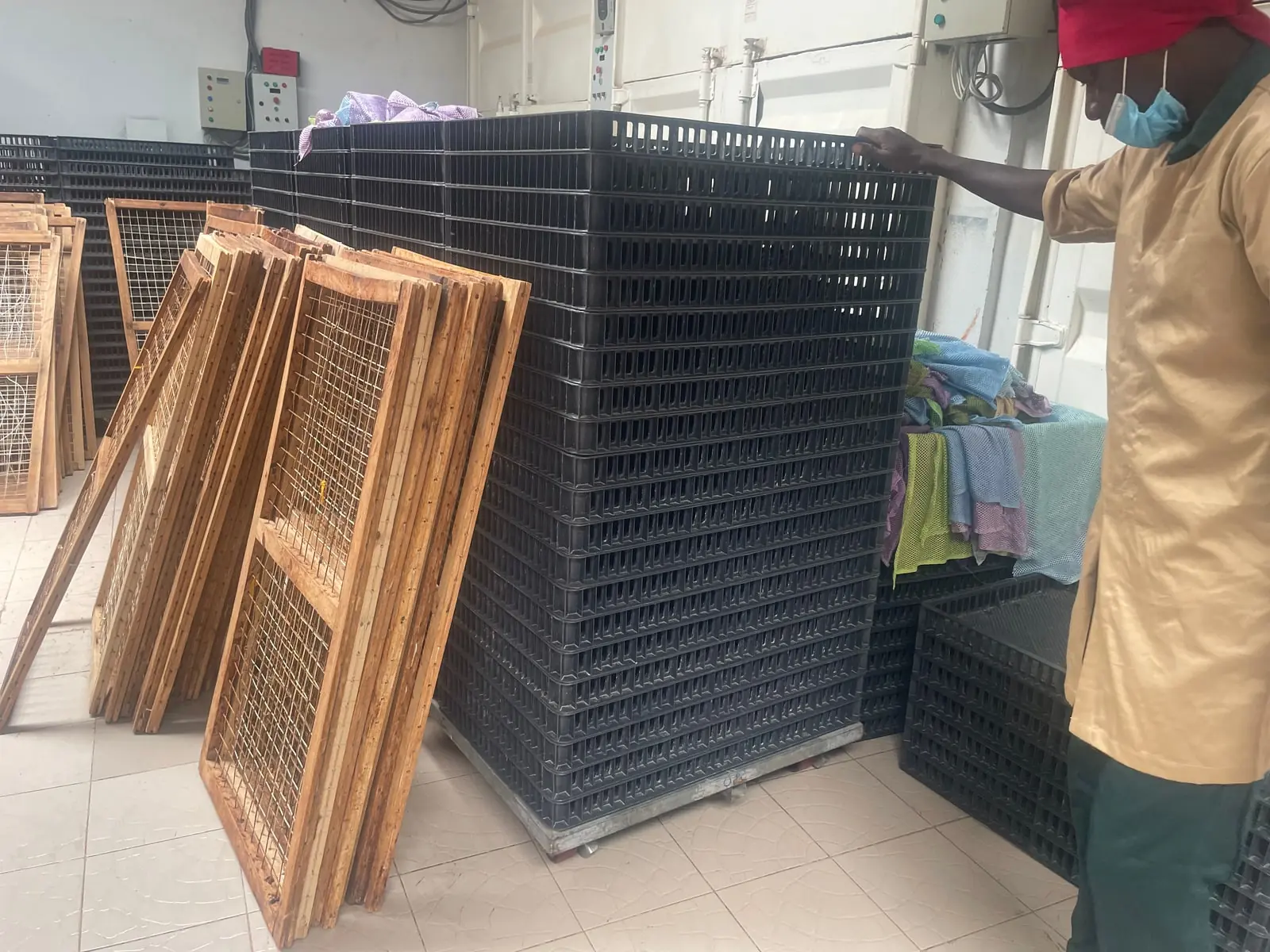
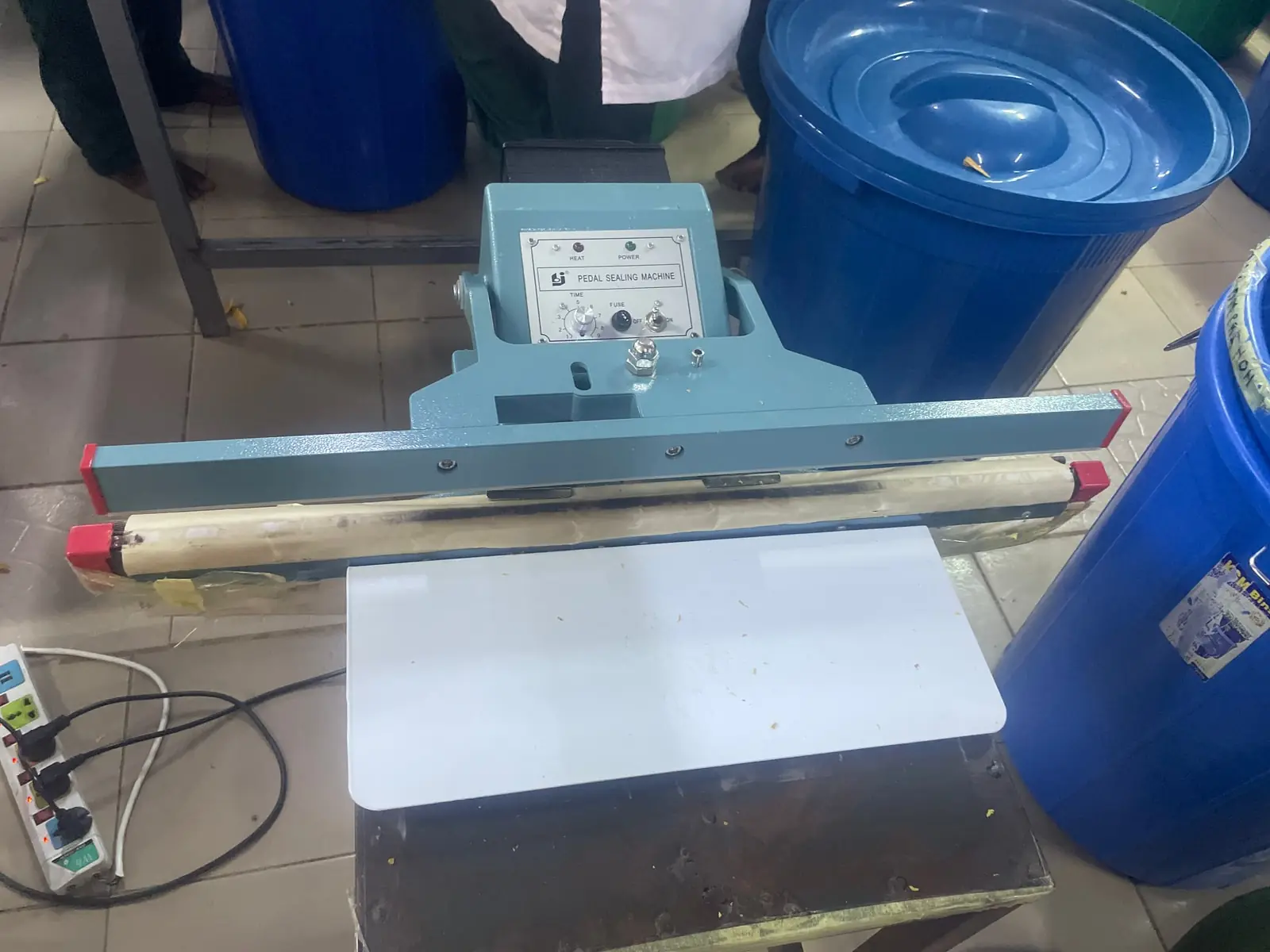
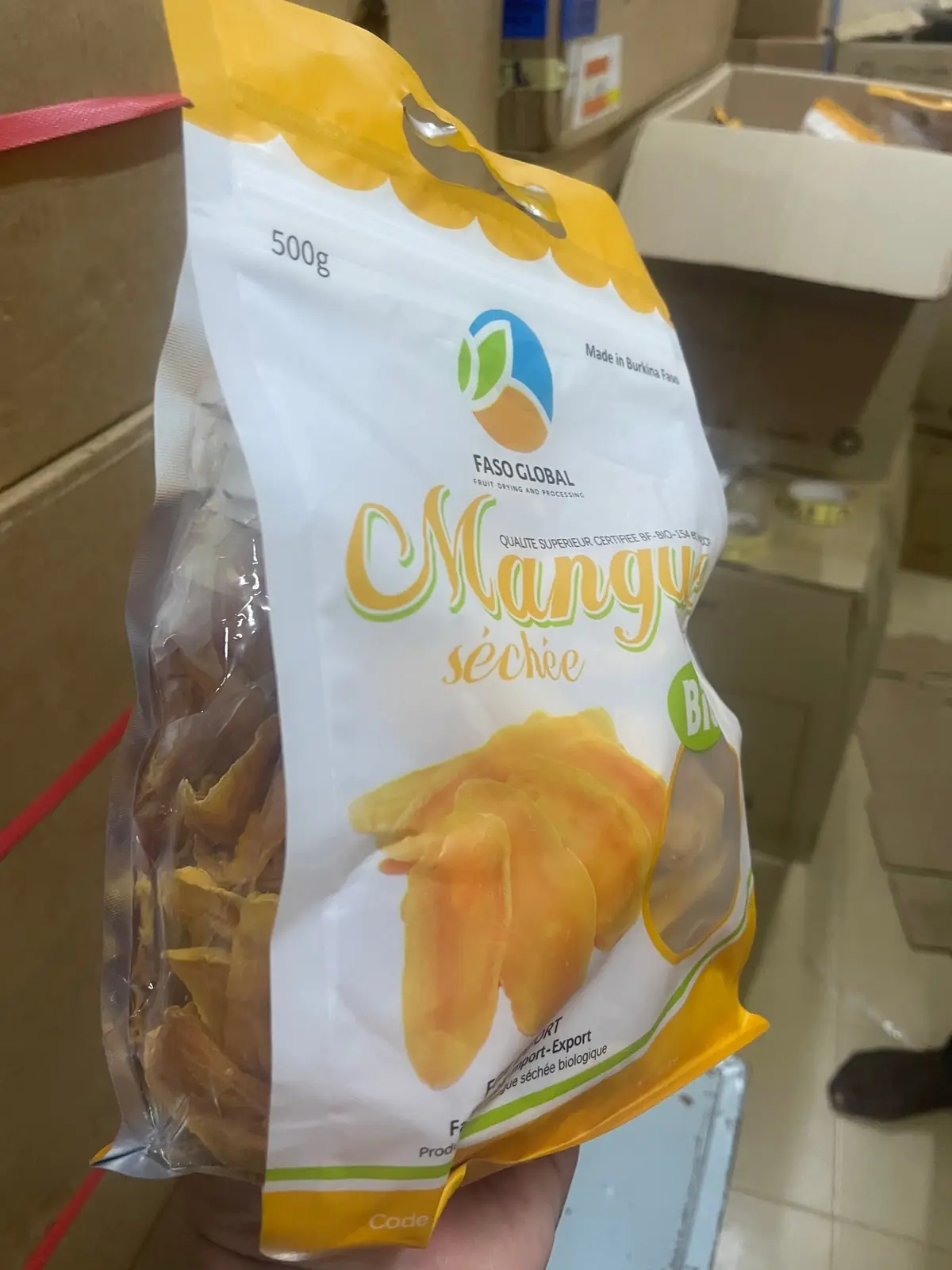
These photographs were taken across the mango trade in West Africa — orchard, intake, cutting bench, dryer, sorting hall, and the packed retail product at the end of it. They show the work as it is currently done, with the equipment already in place, which is what a biomass line comes to replace or supplement.
Production economics
One chamber takes 1,500 kg of fresh fruit per batch — about 150 kg of dried mango — at one batch a day. Across a mango campaign of a hundred to a hundred and twenty days, which is the real length of it from Amélie to Keitt, that is 15 to 18 tonnes of dried product per chamber.
The 450-tonne annual figure assumes a 300-day year, which mango alone does not provide. It is a chamber figure, not a mango figure: outside the campaign the same chamber dries fish, tomato, okra or cashew. A unit that works only mango leaves its capital idle for two-thirds of the year, and that is the single most important sizing question to settle before ordering.
Explore further
By country and crop
Each page carries that country’s harvest calendar, the biomass fuel available locally, and a worked sizing example.
Mango drying in Burkina Faso · Mango drying in Côte d'Ivoire · Mango drying in Mali · Mango drying in Ghana · Mango drying in Senegal · Mango drying in Guinea
- Industrial tunnel dryers and panel-room drying — the chambers that hold this profile.
- Batch units for smaller mango volumes and rapid changeover.
- Cashew shell burner — the heat source shown in the animation.
- Biomass fuels — what the burner accepts, and what is available in your country.
- Mango-waste to livestock feed — a second product from peel and trim.
- Worked mango configurations across Burkina Faso, Ghana, Senegal and Mali.
- EU market intelligence: CBI — exporting dried mango to Europe ↗
Frequently asked questions
How much fresh mango do I need for a tonne of dried?
About ten tonnes of whole fresh fruit, measured at intake before peel and stone removal, at approximately 85 % process yield after trimming and grading. The 10 : 1 ratio is whole fruit to finished product, not flesh to finished product.
What causes case hardening, and how is it avoided?
Case hardening happens when the surface dries faster than moisture can migrate from the centre of the slice. It is avoided by staging temperature within the 65–70 °C band and holding air velocity at 2.5–3.0 m/s, rather than by driving heat up to shorten the cycle.
Do I need to use sulphite?
No, but pre-treatment affects colour and shelf life. Citric dips at 0.5–1 % or ascorbic at 0.2–0.5 % are common; sulphite must be declared above 10 mg/kg residual SO₂ for the EU market, and many buyers decline it outright. Pre-treatment is part of the process specification, not part of the dryer.
What moisture do European buyers require?
12–14 % with water activity below about 0.65 is the working target. Meeting EU quality and contaminant standards is a combined function of fruit selection, pre-treatment, drying control and hygiene — the dryer enables it, it does not guarantee it.
Which mango varieties dry best?
Kent, Keitt, Amélie and Palmer, because they combine very low fibre with flesh firm enough to hold a 5–8 mm slice. Run in sequence from March to July they carry a campaign of a hundred to a hundred and twenty days. Fibrous local varieties suit dried strips poorly and are better used for purée or juice.
Request a mango system quote
We’ll size the chambers and burner to your daily fresh-fruit volume and target output.
Request a quote